
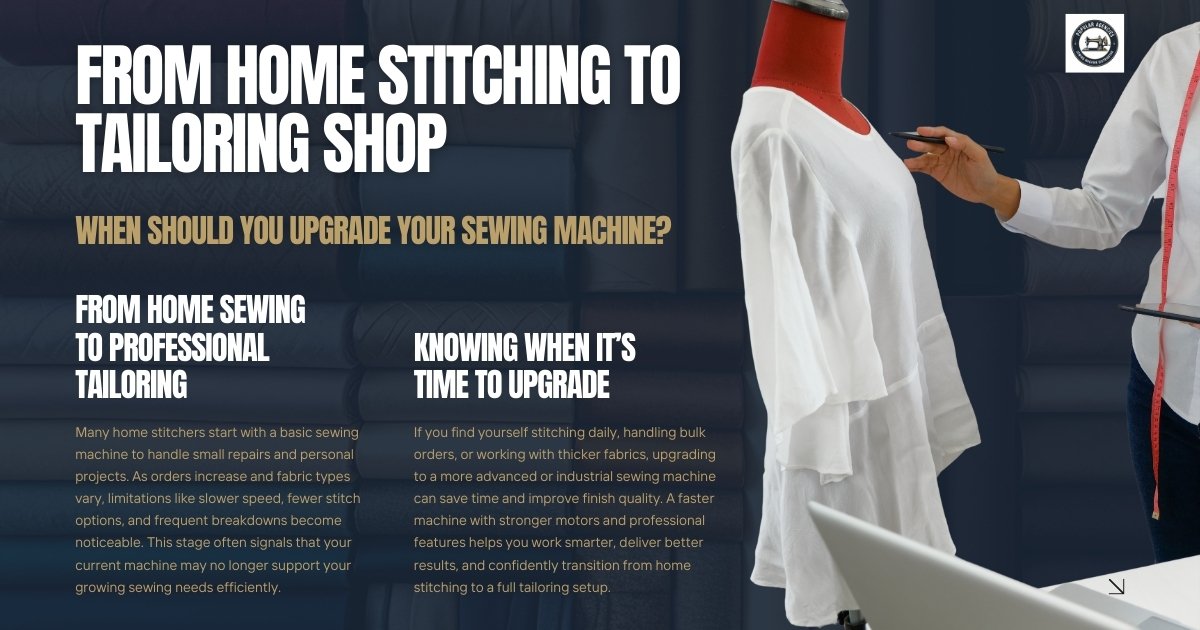
From Home Stitching to Tailoring Shop: When Should You Upgrade Your Machine
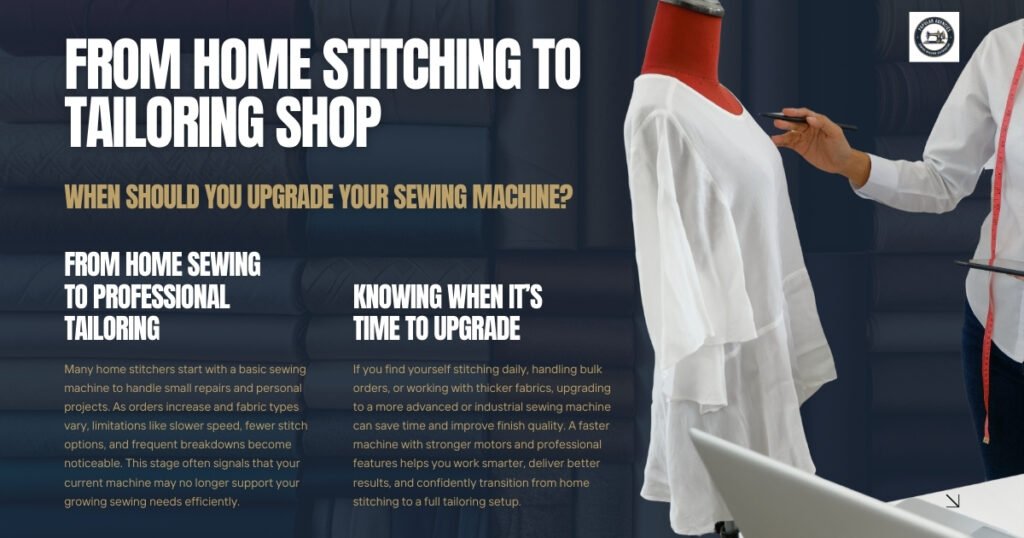
Most tailoring journeys don’t begin with a business plan.
They begin quietly—stitching clothes at home, fixing garments for family, experimenting late at night, or taking small orders from neighbours.
Then one day, you notice something change.
You’re stitching more often.
Orders are increasing.
Your machine feels slower.
Your body feels more tired.
And suddenly, a question appears:
“Is it time to upgrade my sewing machine?”
This blog isn’t about selling you a bigger or more expensive machine.
It’s about helping you recognise when upgrading actually makes sense—and when it doesn’t.
The Silent Transition Most Tailors Experience
Almost every tailor goes through these stages:
- Sewing occasionally at home
- Sewing regularly for others
- Managing small but consistent orders
- Feeling limited by the current machine
- Considering a tailoring shop or full-time work
The problem is that many people delay upgrading too long, while others upgrade too early and regret it.
Understanding where you are in this journey is key.
Clear Signs Your Home Sewing Machine Is Holding You Back
Upgrading isn’t about ambition—it’s about practical limitations.
Here are the most common signs that your current machine is no longer enough.
1. Your Machine Overheats or Slows Down
Home sewing machines are built for intermittent use, not continuous workloads.
If you notice:
- Motor heating up quickly
- Speed reducing during long sessions
- Frequent thread breakage
It’s a sign the machine is working beyond its intended capacity.
2. Stitch Quality Changes With Fabric Type
When you move from casual stitching to tailoring orders, fabric variety increases.
If your machine struggles with:
- Thicker fabrics
- Multiple layers
- Continuous straight stitching
Then your growth is being limited by machine capability, not skill.
3. You’re Spending More Time Fixing Than Stitching
Constant issues like:
- Tension problems
- Needle breakage
- Uneven stitches
- Repeated adjustments
These eat into your productivity and confidence.
A machine upgrade often reduces friction, not increases complexity.
4. You Feel Physically Tired Faster
This is a sign many people ignore.
Manual effort, vibration, and slow stitching increase fatigue.
Industrial or semi-industrial machines are designed to:
- Reduce vibration
- Improve posture
- Maintain consistent speed
If stitching feels exhausting, the machine may be the reason.
The Emotional Barrier: “Am I Ready Yet?”
Many home stitchers hesitate because of fear:
- “What if I can’t handle a bigger machine?”
- “What if I waste money?”
- “What if orders slow down?”
These doubts are normal.
But here’s an important truth:
Upgrading a machine does not turn you into a tailor.
It supports the tailor you already are becoming.
Home Sewing Machine vs Tailoring Shop Machine: The Real Difference
Let’s clarify this without jargon.
Home Machines Are Designed For:
- Learning
- Light stitching
- Occasional use
- Creativity and practice
Tailoring Shop / Industrial Machines Are Designed For:
- Long hours
- Consistent output
- Speed and durability
- Professional finishing
The difference is not skill—it’s load capacity.
When Upgrading TOO EARLY Becomes a Problem
Upgrading early can also backfire if:
- You don’t yet understand stitch control
- You haven’t stitched regularly
- You’re still experimenting casually
A bigger machine won’t teach fundamentals.
Skill still comes first.
That’s why the best upgrade timing is when:
- Your skills are stable
- Your workload is increasing
- Your machine is slowing you down
The Right Upgrade Path (Not a Sudden Jump)
Upgrading doesn’t mean jumping from a home machine straight to a factory setup.
A smart progression looks like this:
- Basic home machine
→ automatic or heavy-duty home machine
→ semi-industrial lockstitch
→ industrial + overlock (if business grows)
This path reduces risk and builds confidence.
Questions to Ask Yourself Before Upgrading
Ask these honestly:
- Am I stitching almost every day?
- Do I receive paid orders?
- Does my machine limit speed or quality?
- Would faster stitching improve income or reduce stress?
- Do I plan to continue tailoring long-term?
If most answers are “yes,” upgrading is no longer emotional—it’s logical.
Why Many Tailors Regret Delaying the Upgrade
One common regret tailors share later is:
“I should have upgraded earlier.”
Why?
- They worked longer hours than necessary
- They earned less than they could have
- They felt unnecessary strain
A better machine doesn’t replace effort—but it respects your effort.
Final Thoughts: Upgrade When Growth Demands It, Not Ego
Upgrading your sewing machine is not about status or ambition.
It’s about respecting your time, body, and progress.
If your home stitching is slowly turning into professional work, your machine should grow with you—not resist you.
The right upgrade at the right time doesn’t just improve stitching.
It changes how confident and capable you feel as a tailor.





Add comment