
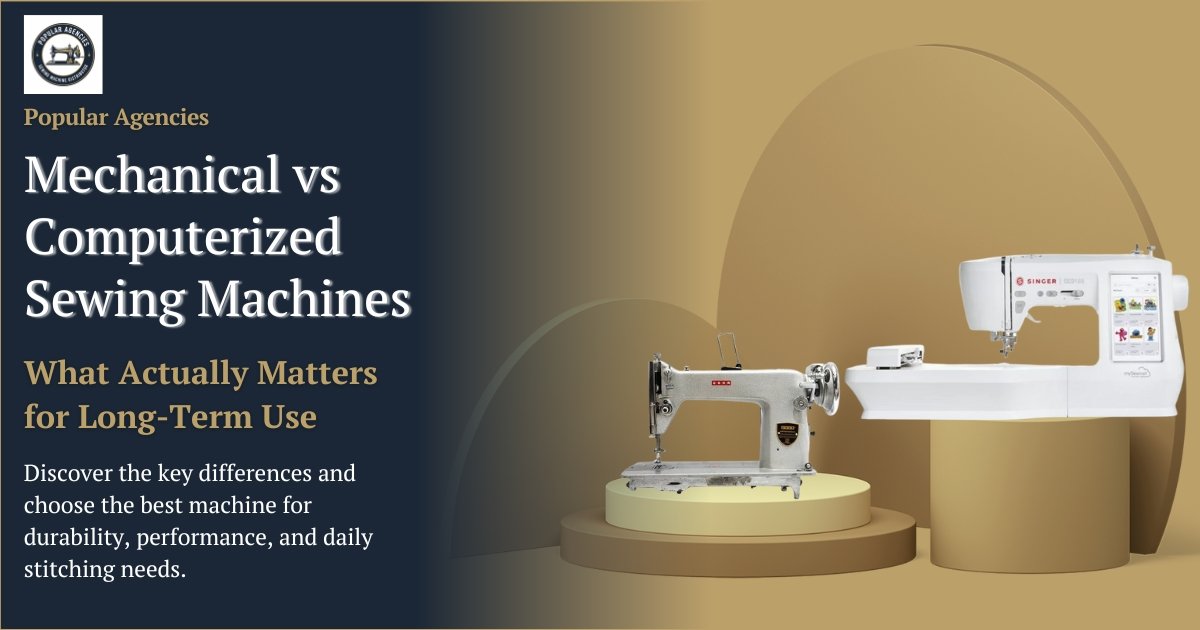
Mechanical vs Computerized Sewing Machines: What Actually Matters for Long-Term Use
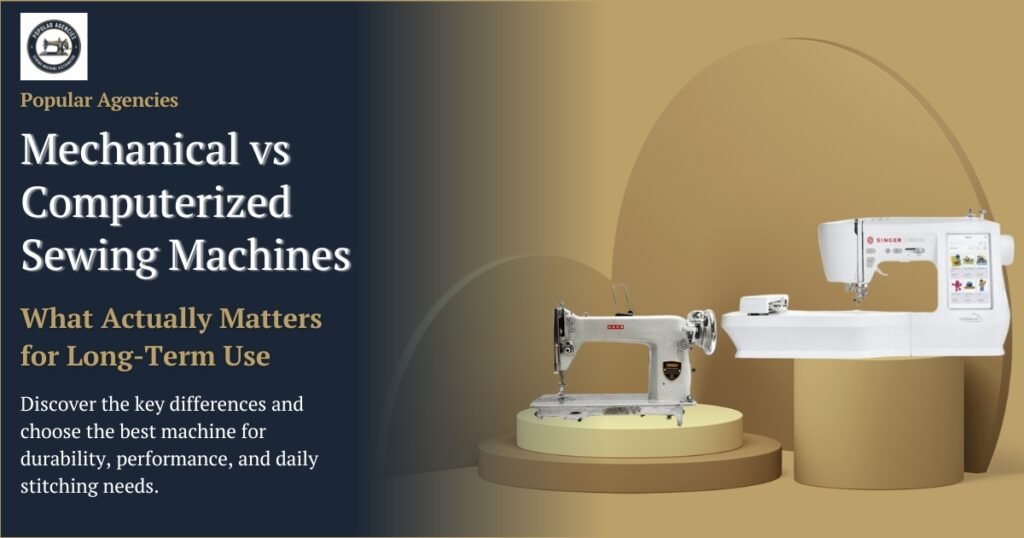
When people compare mechanical and computerized sewing machines, the discussion often gets stuck on features. Buttons, displays, stitch counts, and automation dominate the conversation. But for long-term use, features matter far less than how the machine behaves year after year.
This guide focuses on what actually matters over time—reliability, maintenance, control, and suitability for daily work—so you can choose the type of sewing machine that fits your long-term needs, not just your short-term excitement.
Understanding the Core Difference
At a fundamental level, the difference is simple:
- Mechanical sewing machines rely on manual controls, gears, and physical adjustments.
- Computerized sewing machines use electronic systems to control stitch patterns, speed, and functions.
Both can produce excellent stitches. The long-term experience, however, can be very different.
Mechanical Sewing Machines: Built for Simplicity and Control
Mechanical sewing machines are designed around direct user control. Every adjustment—stitch length, tension, speed—happens through physical interaction with the machine.
What Holds Up Over Time
- Fewer electronic components mean fewer failure points
- Wear and tear is gradual and predictable
- Performance remains consistent with basic maintenance
Many long-term users prefer mechanical machines because they are easier to understand, easier to service, and easier to keep running for years.
When Mechanical Machines Make Sense
Mechanical machines are often chosen by:
- Users who stitch regularly and value reliability
- Tailors who prefer hands-on control
- Users working in environments where consistency matters more than automation
Their biggest strength is not speed or variety, but dependability.
Computerized Sewing Machines: Precision Through Automation
Computerized sewing machines use digital controls to manage stitching functions. Once settings are selected, the machine maintains consistency automatically.
What They Offer Long-Term
- Uniform stitch quality with minimal adjustment
- Easier learning curve for complex stitches
- Reduced manual effort during repetitive tasks
For users who enjoy creative work or want assistance with precision, computerized machines can be very satisfying over time.
Long-Term Considerations
However, long-term use also means:
- Dependence on electronic components
- Need for careful handling and environment control
- Importance of proper service support
With the right usage and care, computerized machines can perform well for years, but they require a different kind of responsibility from the user.
Durability Is About Usage, Not Technology
One common misconception is that mechanical machines last longer simply because they are mechanical. In reality, durability depends on how well the machine matches the workload.
- A mechanical machine used beyond its intended capacity will wear quickly.
- A computerized machine used within its design limits can remain stable for years.
The key is choosing the machine type that aligns with your daily stitching intensity, not just personal preference.
Maintenance and Servicing: A Major Long-Term Factor
Maintenance is where long-term differences become noticeable.
- Mechanical machines typically require basic cleaning and periodic oiling.
- Computerized machines need dust-free handling and careful servicing of electronic parts.
Access to reliable service support plays a major role here. This is why guidance from an experienced sewing machine store like Popular Agencies helps users choose realistically rather than emotionally.
Ease of Use Over the Years
What feels convenient in the first month may feel different after years of use.
- Mechanical machines reward experience and muscle memory
- Computerized machines reduce effort through automation
Neither approach is superior universally. Long-term satisfaction comes from choosing the style of operation that matches how you like to work, not what looks advanced.
Cost vs Value Over Time
Initial cost is only part of the story.
Long-term value depends on:
- Stability of performance
- Ease of servicing
- Longevity of components
- Suitability for your evolving needs
A simpler machine that performs consistently for years often delivers more value than a complex machine that is underused or difficult to maintain.
Final Perspective: What Actually Matters Long-Term
For long-term use, the most important factors are:
- Reliability under your daily workload
- Comfort and control during extended stitching
- Clear service and maintenance expectations
Mechanical and computerized sewing machines both have their place. The right choice is the one that fits your work style, environment, and long-term expectations, not just the feature list.
FAQs: Mechanical vs Computerized Sewing Machines
Which sewing machine type lasts longer in regular use?
Longevity depends on how well the machine matches the user’s workload and how consistently it is maintained, rather than whether it is mechanical or computerized.
Are mechanical sewing machines easier to maintain long-term?
Yes. Mechanical machines generally have simpler maintenance needs and fewer electronic components, making long-term care more straightforward.
Do computerized sewing machines lose accuracy over time?
With proper care and servicing, computerized machines can maintain accuracy. Issues usually arise from improper handling or lack of maintenance.
Is one type better for continuous daily stitching?
Machines designed for continuous use—regardless of type—perform better when used within their intended capacity.
Does learning curve affect long-term satisfaction?
Yes. Users who are comfortable with their machine’s control style tend to enjoy better long-term results and fewer operational frustrations.
Should long-term users avoid advanced features?
Not necessarily. Features are beneficial if they support regular work. Problems arise when features are unused or add unnecessary complexity.





Add comment