
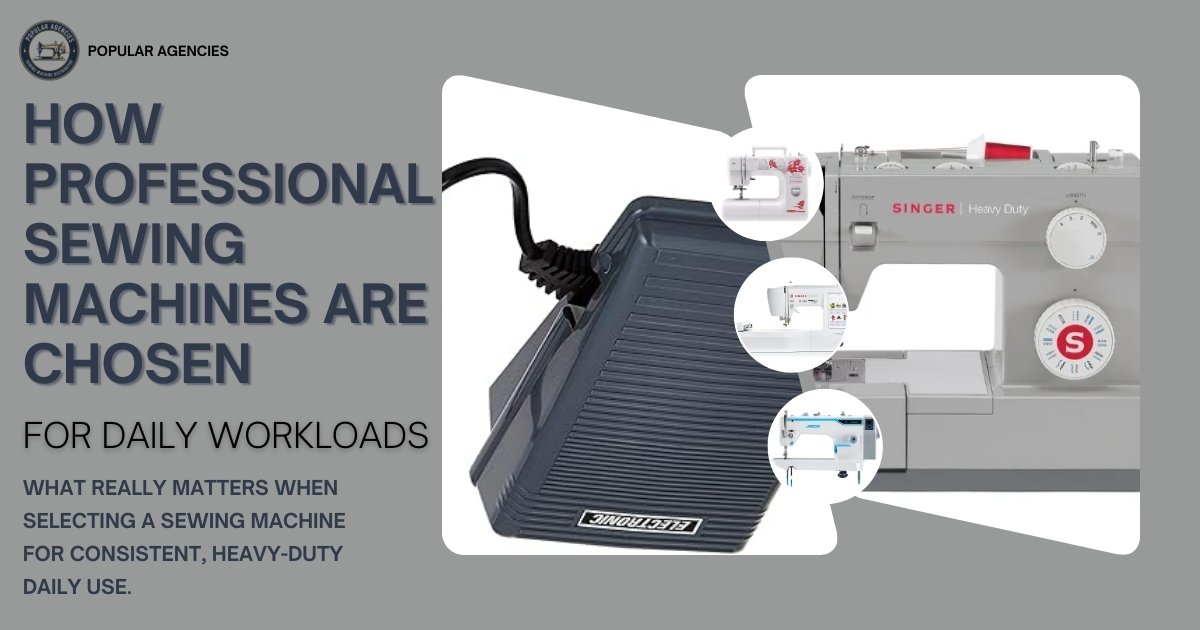
How Professional Sewing Machines Are Chosen for Daily Workloads
Professional sewing machines are not chosen based on appearance, feature count, or short-term convenience. For tailors, workshops, and production-focused users, a sewing machine is a working tool, not a hobby device. The wrong choice directly affects productivity, income, and workflow stability.
This blog explains how professionals actually choose sewing machines for daily workloads, based on real usage conditions rather than marketing claims.
Daily Workload Comes First—Always
Professionals begin with one core question:
How many hours will this machine run every day?
Daily workloads typically involve:
- Continuous stitching for several hours
- Repetitive seam work
- Minimal downtime between jobs
Machines selected for professional use must handle sustained operation without overheating, vibration, or stitch inconsistency.
Consistency Matters More Than Speed
While speed is important, professionals value consistent stitch formation even more.
A professional sewing machine must:
- Maintain uniform stitches across long seams
- Perform predictably from morning to evening
- Handle repeated tasks without recalibration
Machines that fluctuate in performance slow down work and increase error correction time.
Machine Stability Is a Key Selection Factor
Professionals pay close attention to how a machine behaves physically during use.
Stable machines:
- Reduce vibration during continuous stitching
- Allow better fabric control
- Lower operator fatigue
A stable machine helps maintain accuracy during long working hours and improves overall output quality.
Purpose-Built Machines Are Preferred
Professional users rarely look for “all-in-one” solutions. Instead, they choose machines designed for specific tasks, such as:
- Straight stitching
- High-speed repetitive seams
- Consistent alteration work
Purpose-built machines perform their designated task more efficiently and last longer under daily stress.
Maintenance Predictability Is Critical
For professionals, maintenance should be predictable, not disruptive.
Preferred machines are those that:
- Require routine, simple maintenance
- Allow easy access for servicing
- Show gradual wear instead of sudden failures
This predictability helps professionals plan service intervals without unexpected downtime.
Long-Term Comfort Influences Productivity
Daily workloads mean long hours at the machine. Professionals evaluate:
- Smooth pedal response
- Comfortable control layout
- Reduced physical strain during operation
A machine that feels tiring after a few hours quickly becomes a productivity bottleneck.
Service Access Is a Deciding Factor
No matter how strong a machine is, service access determines its real-world value.
Professionals consider:
- Availability of technician support
- Clarity of service and warranty terms
- Ease of getting guidance when needed
This is where experienced sewing machine stores like Popular Agencies add value by aligning machine choice with actual workload conditions rather than assumptions.
Professionals Avoid These Common Mistakes
Experienced users usually avoid:
- Choosing machines based only on speed ratings
- Overloading machines beyond their intended capacity
- Buying feature-heavy machines with limited daily relevance
- Ignoring service and maintenance realities
These mistakes are common among first-time buyers but rare among long-term professionals.
Why Professionals Think in Years, Not Months
Professional users evaluate machines based on:
- How performance holds up after years of use
- How easily issues can be resolved
- Whether the machine remains dependable under pressure
Short-term convenience never outweighs long-term reliability in professional settings.
Final Insight: Daily Workload Defines the Right Machine
Professional sewing machines are chosen through practical evaluation, not impulse. When a machine aligns with workload intensity, task type, and service support, it becomes a reliable partner rather than a recurring problem.
The right professional sewing machine is one that quietly performs its job, day after day, without demanding constant attention.
FAQs: Professional Sewing Machines for Daily Workloads
What defines a sewing machine suitable for professional daily use?
A professional machine must handle long hours of continuous operation while maintaining consistent stitch quality and stable performance.
Do professionals prefer high-speed sewing machines?
Speed is useful, but only when combined with control and consistency. Unstable speed can reduce overall productivity.
How important is machine stability for daily workloads?
Very important. Stability reduces vibration, improves stitch accuracy, and lowers operator fatigue during long working hours.
Do professional sewing machines require frequent servicing?
They require regular maintenance, but well-chosen machines have predictable service intervals rather than frequent breakdowns.
Is comfort really important for professional sewing work?
Yes. Daily use means operator comfort directly affects productivity and long-term health.
Why do professionals avoid feature-heavy machines?
Because unnecessary features add complexity without improving daily output. Professionals prioritize reliability and task-specific performance.




Add comment