
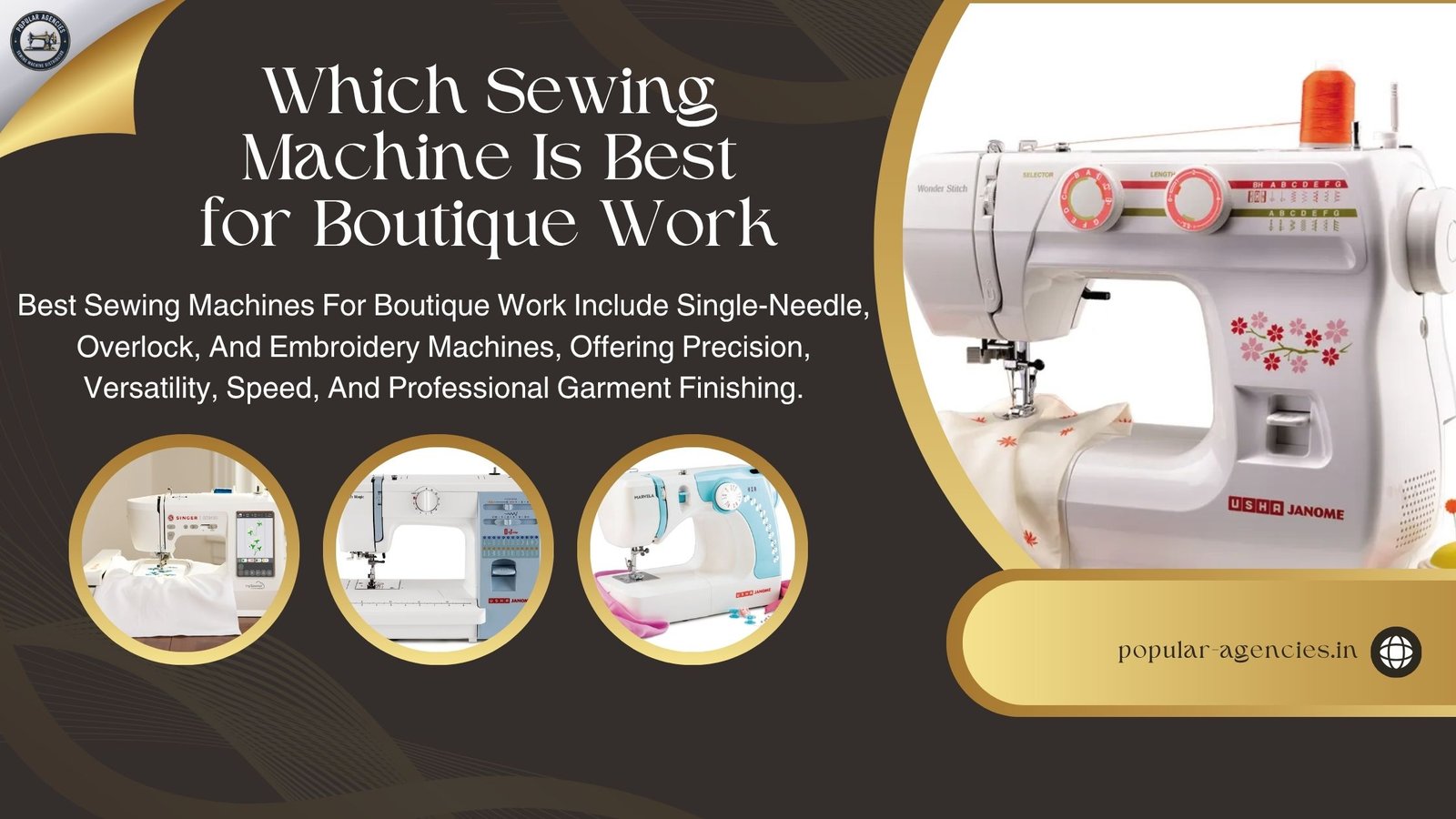
Which Sewing Machine Is Best for Boutique Work? (Complete Guide for Designers)
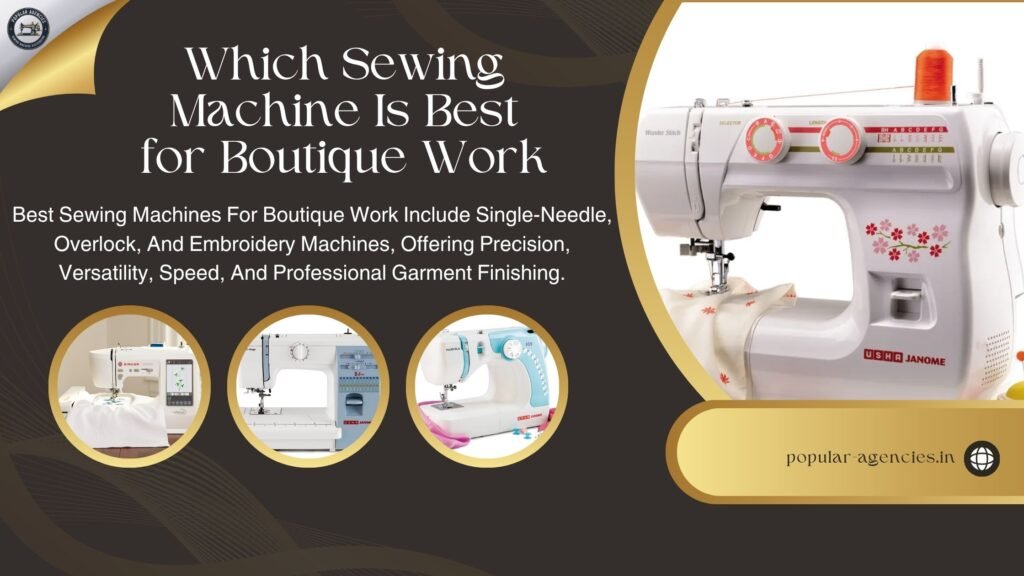
Running a boutique is very different from running a regular tailoring shop. While tailoring focuses on basic garment construction, boutique work involves design, creativity, finishing, and customization.
Because of this, the sewing machines used in boutique work must offer more than just stitching—they must support precision, flexibility, and design control.
If you are a boutique owner or planning to start one, choosing the right sewing machine setup is critical. The wrong machine can limit your design capabilities, while the right one can help you deliver professional-quality garments consistently.
This guide explains which sewing machines are best for boutique work, what features matter, and how to build the right machine setup for your boutique.
What Makes Boutique Sewing Different?
Boutique stitching is not just about joining fabric pieces. It involves:
- Custom garment design
- Decorative stitching
- Working with delicate fabrics
- Finishing details like embroidery and buttonholes
- Handling unique customer requirements
Because of these needs, boutique owners require machines that are versatile and precise, not just fast.
Types of Sewing Machines Needed for Boutique Work
Most successful boutiques use a combination of machines instead of relying on just one.
1. Automatic Zig-Zag Sewing Machine (Core Machine)
Why it’s important:
This is the primary machine for boutique work.
Best For:
- Garment construction
- Decorative stitching
- Zig-zag seams
- Designer patterns
Why boutique owners prefer it:
- Multiple stitch options
- Easy stitch control
- Suitable for various fabrics
2. Overlock Sewing Machine (Finishing Machine)
Why it’s important:
Boutique garments require clean internal finishing.
Best For:
- Edge finishing
- Seam reinforcement
- Stretch fabrics
Without an overlock machine, garments may not look professionally finished.
3. Embroidery Machine (Value Addition Machine)
Why it’s important:
Adds unique design value to garments.
Best For:
- Name embroidery
- Custom designs
- Bridal and festive wear
Boutiques that offer embroidery can charge higher prices.
4. Industrial Straight Stitch Machine (Production Support)
Why it’s important:
For faster garment construction.
Best For:
- Bulk stitching
- Faster seam joining
- Production efficiency
5. Buttonhole and Button Attaching Machines (Advanced Setup)
Why it’s important:
Ensures clean finishing in premium garments.
Best For:
- Shirts
- Kurtas
- Formal wear
Best Sewing Machine Setup for a Boutique
Depending on your scale, here’s a practical setup:
Small Boutique Setup
- Automatic zig-zag sewing machine
- Overlock sewing machine
Growing Boutique Setup
- Automatic sewing machine
- Overlock machine
- Embroidery machine
Advanced Boutique Setup
- Automatic sewing machine
- Overlock machine
- Embroidery machine
- Straight stitch industrial machine
- Buttonhole machine
Key Features Boutique Owners Should Look For
1. Stitch Variety
Boutique work requires multiple stitch patterns for:
- Decorative designs
- Fabric finishing
- Custom styling
2. Precision Control
Precision is important for:
- Necklines
- Sleeves
- Design elements
Machines should allow smooth speed control.
3. Fabric Compatibility
Boutiques often work with:
- Cotton
- Silk
- Georgette
- Stretch fabrics
Machines must handle delicate fabrics without damage.
4. Reliability
Boutique businesses depend on:
- Consistent stitching
- Minimal machine downtime
5. Design Capability
Machines that support embroidery or decorative stitching help:
- Increase design value
- Attract premium customers
Common Mistakes Boutique Owners Make
Using Only One Machine
One machine cannot handle all tasks effectively.
Ignoring Finishing Machines
Overlock machines are essential for professional garment finishing.
Not Investing in Design Machines
Without embroidery or decorative options, boutiques may lose premium customers.
Choosing Based Only on Price
Low-cost machines may limit design flexibility.
How the Right Machine Setup Increases Boutique Profit
The right sewing machines help you:
- Deliver better quality garments
- Offer more customization options
- Work faster and handle more orders
- Charge premium pricing
Machines are not just tools—they directly impact your business growth.
When Should You Upgrade Your Boutique Machines?
Upgrade when:
- Order volume increases
- You start offering custom designs
- You handle premium fabrics
- You need faster production
Final Thoughts
Boutique work requires more than basic stitching—it requires creativity, precision, and professional finishing. Choosing the right sewing machines helps you deliver high-quality garments while expanding your design capabilities.
A combination of automatic sewing machines, overlock machines, and embroidery machines creates a strong foundation for any boutique business.
Investing in the right machines ensures long-term growth, better customer satisfaction, and the ability to stand out in a competitive market.
FAQs
Which sewing machine is best for boutique work?
A combination of automatic zig-zag sewing machine and overlock machine is ideal for most boutique setups.
Do boutique owners need an embroidery machine?
Not initially, but it helps add design value and increase profits.
Can I run a boutique with one sewing machine?
Yes, but having multiple machines improves efficiency and quality.
What fabrics do boutique sewing machines handle?
They typically handle cotton, silk, georgette, and stretch fabrics.
Is an industrial sewing machine necessary for boutiques?
It is useful for faster production but not mandatory in the beginning.
How much should I invest in boutique machines?
Initial setups can start from ₹20,000–₹50,000 depending on scale.




Add comment