
Table of Contents
- Introduction
- Understanding High-Speed Sewing Machines
- Choose the Right Machine for Your Production Needs
- Train Operators Properly
- Utilize Programmable Speed Control
- Maintain Proper Needle Selection
- Perform Regular Machine Maintenance
- Optimize Workplace Layout
- Reduce Machine Downtime
- Improve Thread Quality
- Use LED Needle Lighting
- Standardize Sewing Operations
- Monitor Production Performance
- Implement Preventive Maintenance
- Invest in Direct Drive Technology
- Organize Materials Efficiently
- Encourage Continuous Skill Development
- Benefits of High-Speed Sewing Machines
- Technical Specifications
- Final Thoughts
In today’s competitive garment manufacturing industry, improving productivity is essential for meeting customer demands while maintaining consistent product quality. Whether you operate a garment factory, tailoring unit, boutique, or textile production facility, investing in efficient industrial sewing equipment directly impacts production output, operating costs, and profitability.
High-speed industrial sewing machines are specifically engineered for continuous commercial production, helping manufacturers complete more garments in less time without compromising stitch quality. Combined with skilled operators, proper maintenance, and an organized production workflow, these machines significantly improve efficiency while reducing downtime and operator fatigue.
Introduction
Increasing productivity is one of the biggest priorities for garment manufacturers, tailoring shops, and boutique owners. High-speed industrial sewing machines help businesses complete more garments in less time while maintaining consistent stitch quality and reducing operator fatigue.
However, productivity depends on more than just machine speed. Proper maintenance, skilled operators, quality accessories, and an optimized production workflow all contribute to maximizing efficiency. This guide explains practical strategies that help businesses get the best possible performance from high-speed industrial sewing machines.
Understanding High-Speed Sewing Machines
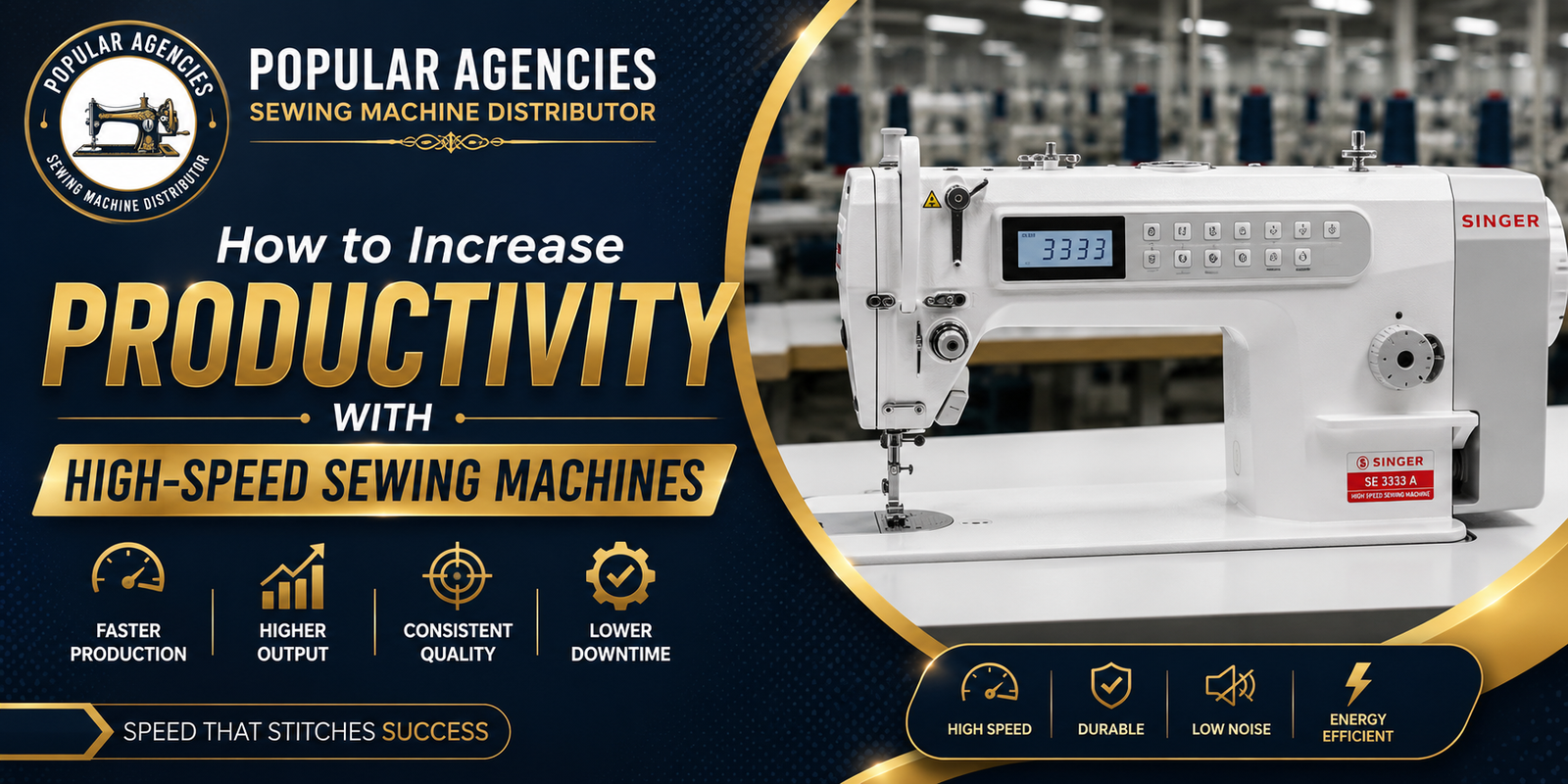
High-speed industrial sewing machines are designed for continuous commercial production and typically operate between 4,000 and 5,500 stitches per minute (SPM). Compared to conventional sewing machines, they provide greater efficiency, precision, and long-term reliability, making them the preferred choice for commercial apparel manufacturing.
These machines are commonly used in:
- Garment manufacturing
- Tailoring shops
- Boutiques
- Uniform production
- Home textile manufacturing
- Export garment industries
Choose the Right Machine for Your Production Needs
Selecting the appropriate industrial sewing machine is the foundation of efficient production. Every sewing operation requires specialized equipment to achieve maximum productivity and maintain excellent stitch quality.
Different sewing applications require different machines:
- Single Needle Lockstitch Machines – General garment stitching.
- Overlock Machines – Edge finishing and seam protection.
- Interlock Machines – Knit fabrics and stretch garments.
- Walking Foot Machines – Leather, canvas, upholstery, and heavy materials.
- Embroidery Machines – Decorative stitching and logo embroidery.
Using the correct machine for each application minimizes production delays, improves seam consistency, reduces operator fatigue, and enhances the overall quality of finished garments.
Train Operators Properly
Well-trained sewing machine operators play a crucial role in improving production efficiency while minimizing material waste and machine downtime. Proper training enables operators to work confidently, maintain consistent stitching quality, and identify minor machine issues before they become major production problems.
A comprehensive operator training program should include:
- Correct threading techniques
- Machine speed adjustment
- Proper fabric handling
- Accurate needle positioning
- Basic troubleshooting procedures
- Daily machine maintenance practices
Skilled operators produce higher-quality garments, reduce thread breakage, minimize rework, and help maintain smooth production throughout every shift.
Utilize Programmable Speed Control
Modern direct-drive industrial sewing machines feature programmable speed controls that allow operators to adjust stitching speeds according to fabric type, garment complexity, and operator experience. This flexibility improves precision while maintaining high production efficiency.
The key advantages of programmable speed control include:
- Better machine control
- Reduced operator fatigue
- Fewer sewing mistakes
- Improved corner stitching accuracy
- Consistent production quality
Adjusting sewing speed according to production requirements helps operators achieve better stitch consistency while increasing confidence and maintaining higher productivity throughout the workday.
Maintain Proper Needle Selection
Selecting the correct sewing needle is essential for achieving clean stitches, reducing thread breakage, and protecting delicate fabrics from damage. The needle should always match both the fabric type and the thread specification being used.
Best practices include:
- Choose the correct needle size for each fabric.
- Replace bent or damaged needles immediately.
- Inspect needles regularly during production.
- Use high-quality industrial sewing needles.
Proper needle selection not only improves stitch quality but also extends machine life by reducing unnecessary wear on internal components.
Perform Regular Machine Maintenance
Routine maintenance is one of the most effective ways to maximize the lifespan of industrial sewing machines while preventing unexpected production interruptions. A properly maintained machine operates smoothly, produces consistent stitches, and minimizes costly repairs.
Routine maintenance should include:
- Cleaning lint and dust buildup
- Checking thread tension
- Lubricating moving components
- Inspecting hook timing
- Replacing worn machine parts
- Cleaning the bobbin area regularly
Following a scheduled maintenance routine helps prevent unexpected downtime while ensuring stable machine performance during continuous commercial production.
Optimize Workplace Layout
An organized production floor reduces unnecessary operator movement and creates a smoother manufacturing process. Efficient workstation placement improves productivity by allowing materials to flow naturally from one production stage to the next.
An efficient production sequence typically follows:
- Fabric Preparation
- Cutting
- Sewing
- Overlocking
- Finishing
- Quality Inspection
- Packing
A well-planned workplace layout minimizes bottlenecks, shortens production time, and allows operators to maintain a continuous workflow without unnecessary interruptions.
Reduce Machine Downtime
Unexpected machine downtime directly impacts production schedules, delivery commitments, and overall profitability. Establishing preventive inspection routines and maintaining essential spare parts ensures uninterrupted production and minimizes costly delays.
Keep the following essential items readily available:
- Industrial sewing needles
- Bobbins
- Presser feet
- Thread guides
- Drive belts
- Machine oil
Maintaining an inventory of frequently used replacement parts helps technicians resolve minor issues quickly, reducing production interruptions and maximizing equipment availability.
Improve Thread Quality
Thread quality has a significant impact on stitch consistency, seam strength, and machine performance. Premium industrial sewing thread produces smoother stitches while reducing lint buildup, thread breakage, and unnecessary machine maintenance.
Best practices include:
- Use industrial-grade sewing thread.
- Store thread in a clean and dry environment.
- Match thread size to the fabric being sewn.
- Replace damaged or worn thread cones immediately.
Using premium thread improves stitch appearance, enhances seam durability, and minimizes interruptions caused by thread snapping during production.
Use LED Needle Lighting
Integrated LED needle lighting improves visibility around the sewing area, allowing operators to work with greater precision while reducing eye strain during extended production shifts.
Benefits of LED lighting include:
- Better stitch accuracy
- Improved visibility around the needle area
- Greater comfort during long working hours
- Reduced sewing mistakes
Enhanced illumination allows operators to maintain higher accuracy while increasing productivity and reducing operator fatigue.
Standardize Sewing Operations
Standard operating procedures (SOPs) ensure every garment is produced using consistent methods, improving product quality while minimizing production errors.
Every sewing operation should define:
- Standard stitch length
- Recommended needle size
- Thread type
- Machine speed
- Quality inspection checkpoints
Documented procedures simplify operator training, improve consistency across production lines, and reduce the likelihood of costly defects.
Monitor Production Performance
Tracking production performance helps manufacturers identify bottlenecks, evaluate operator efficiency, and improve overall manufacturing productivity.
Important performance indicators include:
- Pieces produced per hour
- Machine utilization
- Operator efficiency
- Downtime duration
- Defect rate
Regular performance monitoring enables managers to make informed decisions that improve production efficiency while maintaining consistent quality standards.
Implement Preventive Maintenance
Preventive maintenance reduces unexpected equipment failures and extends the operational life of industrial sewing machines. A scheduled maintenance plan keeps production running efficiently throughout the year.
Weekly Maintenance Tasks
- Clean the machine thoroughly.
- Inspect lubrication levels.
- Remove lint accumulation.
Monthly Maintenance Tasks
- Inspect hook timing.
- Check motor performance.
- Adjust thread tension.
- Inspect electrical connections.
Following preventive maintenance schedules reduces emergency repairs, improves machine reliability, and supports continuous production without unnecessary interruptions.
Invest in Direct Drive Technology
Direct-drive industrial sewing machines offer superior performance by transferring power directly from the motor to the machine, eliminating traditional belt-driven mechanisms. This design improves responsiveness while reducing maintenance requirements.
Advantages include:
- Reduced vibration
- Lower energy consumption
- Less operating noise
- Higher sewing accuracy
- Faster machine response
Organize Materials Efficiently
Keeping sewing accessories organized allows operators to spend more time sewing and less time searching for tools or materials. An organized workspace contributes directly to higher production efficiency.
Essential storage areas include:
- Fabric storage racks
- Thread organizers
- Needle storage trays
- Accessory compartments
- Spare parts cabinets
Proper material organization reduces unnecessary movement, improves workflow, and increases overall production efficiency.
Encourage Continuous Skill Development
Regular operator training ensures employees remain up to date with modern sewing technologies, machine features, and improved manufacturing techniques. Continuous learning contributes to better productivity and consistent product quality.
Training topics should include:
- Advanced stitching techniques
- Industrial machine maintenance
- Workplace safety practices
- Modern productivity improvement methods
Businesses that invest in continuous employee development consistently achieve higher production efficiency, better garment quality, and stronger long-term business performance.
Benefits of High-Speed Sewing Machines
High-speed industrial sewing machines offer numerous advantages that help garment manufacturers increase production capacity while maintaining superior stitch quality. Their advanced engineering, combined with efficient production practices, enables businesses to meet growing customer demands with greater consistency and profitability.
Some of the major benefits include:
- Higher daily production output
- Consistent stitch quality
- Lower operating costs
- Reduced machine downtime
- Improved energy efficiency
- Enhanced operator comfort
- Better product quality
- Greater business profitability
Whether you’re running a small tailoring unit or a large-scale garment factory, investing in modern industrial sewing technology helps improve efficiency while maintaining professional-quality results across every production batch.
Technical Specifications
Although specifications vary slightly between manufacturers and models, most modern high-speed industrial sewing machines share the following characteristics.
| Specification | Details |
|---|---|
| Machine Category | High-Speed Industrial Sewing Machine |
| Typical Stitch Speed | 4,000 – 5,500 Stitches Per Minute (SPM) |
| Motor Type | Direct Drive / Servo Motor |
| Suitable Materials | Thin to Medium Weight Fabrics |
| Applications | Garment Manufacturing, Tailoring, Uniform Production, Boutiques |
| Needle System | Industrial Single Needle |
| Lubrication | Automatic Lubrication (Model Dependent) |
| Lighting | Integrated LED Needle Light |
| Operation | Continuous Industrial Production |
| Energy Efficiency | High (Direct Drive Technology) |
Final Thoughts
Increasing productivity with high-speed sewing machines requires more than simply investing in faster equipment. Businesses achieve the best results by combining advanced industrial sewing technology with skilled operators, preventive maintenance, quality sewing accessories, and a well-organized production workflow.
From selecting the right machine and maintaining proper needle quality to implementing preventive maintenance schedules and monitoring production performance, every improvement contributes to higher efficiency and lower operating costs.
Modern direct-drive sewing machines, efficient workplace layouts, premium sewing thread, and continuous operator training enable manufacturers to deliver consistent stitch quality while meeting demanding production targets with confidence.
Whether you’re operating a boutique, tailoring shop, export garment unit, or large-scale apparel manufacturing facility, investing in high-speed industrial sewing machines and following best production practices will help increase output, reduce downtime, improve product quality, and drive long-term business growth.





Add comment