
Table of Contents
- Introduction
- Understanding Home Sewing Machines
- What Makes Professional Tailoring Different?
- Can One Machine Really Do Both?
- Features That Matter Most
- Fabric Compatibility
- Home Machine vs Industrial Machine
- When a Home Machine Is Enough
- When You Need an Industrial Machine
- Tips for Getting the Best Performance
- Choosing the Right Machine
- Conclusion
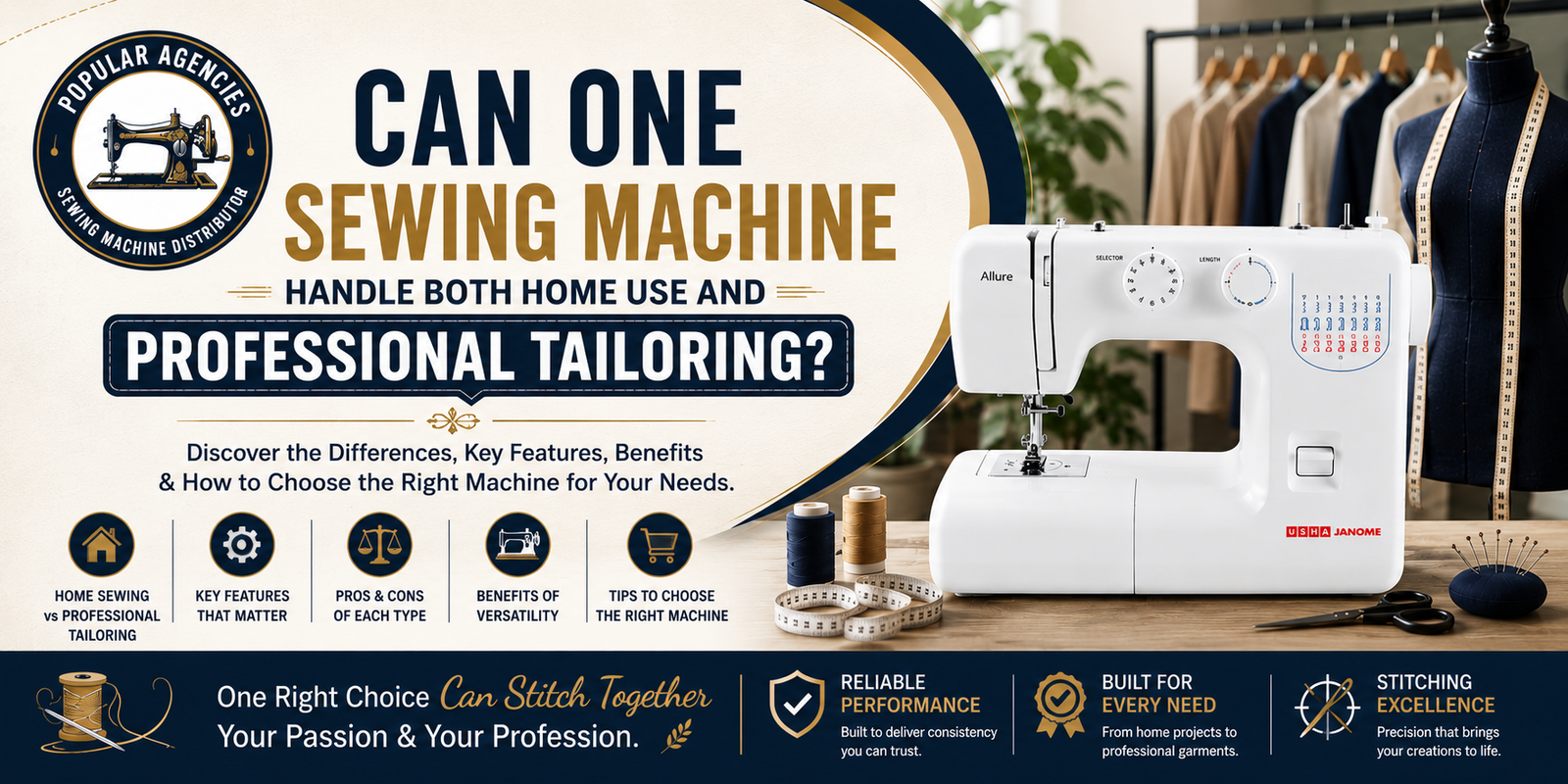
Many people begin sewing as a hobby and eventually consider turning their passion into a business. As their projects become more complex, a common question arises: Can one sewing machine effectively handle both home sewing and professional tailoring?
The answer depends on several factors, including the type of projects you work on, the volume of stitching, fabric thickness, and the features offered by the machine. While some advanced domestic sewing machines are capable of handling light commercial work, industrial sewing machines are specifically designed for continuous, high-speed production.
Understanding the strengths and limitations of each type of sewing machine helps you make an informed investment that supports both your current requirements and your future sewing goals.
Understanding Home Sewing Machines
Home sewing machines are designed for occasional or moderate use. They are compact, lightweight, and equipped with multiple utility and decorative stitch options that make them suitable for a wide variety of personal sewing projects.
They are commonly used for:
- Clothing alterations
- Dressmaking
- Home décor projects
- Quilting
- Craft work
- Children’s clothing
- Simple embroidery
Most home sewing machines operate at moderate speeds while prioritizing ease of use, versatility, and convenience for hobbyists and small tailoring businesses.
Advantages
- Compact and portable design
- Easy to operate
- Affordable investment
- Multiple stitch patterns
- Quiet operation
- Ideal for beginners
Limitations
Although home sewing machines are highly versatile, they are not intended for prolonged daily industrial operation. Continuous sewing sessions may lead to overheating, increased component wear, and reduced efficiency when working with thick or heavy-duty materials.
What Makes Professional Tailoring Different?
Professional tailoring requires consistent stitch quality while handling numerous garments every day. Unlike home sewing, commercial tailoring demands machines that can operate continuously without compromising performance or durability.
Professional tailors commonly work with a wide variety of fabrics, including:
- Cotton
- Linen
- Silk
- Denim
- Leather
- Canvas
- Upholstery fabrics
- Uniform materials
Since commercial tailoring involves long working hours and higher production volumes, sewing machines must maintain accuracy, speed, and reliability throughout continuous operation.
Key Requirements
- Continuous operation
- High stitching speed
- Consistent stitch quality
- Strong needle penetration
- Reduced vibration
- Long service life
Choosing equipment designed for professional workloads helps businesses maintain production efficiency, improve garment quality, and minimize costly downtime.
Can One Machine Really Do Both?
The simple answer is yes—but with certain limitations.
If your tailoring work primarily consists of custom garments, clothing alterations, boutique orders, or small-scale production, a high-quality computerized home sewing machine can successfully manage both home sewing and professional tailoring applications.
However, businesses handling mass production, continuous daily operation, or heavy-duty materials such as leather, canvas, and multiple fabric layers will benefit significantly from investing in an industrial sewing machine.
The right choice ultimately depends on your daily workload, production volume, fabric types, and future business expansion plans.
Features That Matter Most
When selecting a sewing machine capable of handling both home use and professional tailoring, certain features play a critical role in improving flexibility, sewing quality, and long-term performance.
Powerful Motor
A high-performance motor delivers consistent stitching across a wide variety of fabrics without slowing down during extended sewing sessions.
Adjustable Stitch Length and Width
The ability to customize stitch length and width provides greater control when sewing delicate materials, medium-weight fabrics, and thicker garments.
Multiple Presser Feet
Specialized presser feet improve sewing accuracy for various applications, including:
- Zipper installation
- Buttonholes
- Hemming
- Quilting
- Decorative stitching
Automatic Needle Threader
An automatic needle threading system speeds up machine setup while reducing eye strain, making sewing more convenient for both beginners and experienced operators.
Variable Speed Control
Adjustable speed control allows beginners to sew comfortably at slower speeds while giving experienced users the flexibility to increase productivity during larger projects.
Durable Metal Frame
A strong internal metal frame provides better machine stability, minimizes vibration, improves stitch consistency, and extends the overall lifespan of the sewing machine.
Choosing a machine equipped with these features ensures greater versatility, allowing it to perform efficiently in both home sewing environments and small professional tailoring businesses.
Fabric Compatibility
A sewing machine suitable for both home sewing and professional tailoring should be capable of handling a wide range of fabrics with consistent stitch quality. Choosing a versatile machine allows users to work on everything from lightweight garments to moderately heavy materials without requiring multiple machines.
It should perform efficiently on:
- Cotton
- Polyester
- Linen
- Rayon
- Silk
- Satin
- Denim
- Canvas
- Light leather
- Stretch fabrics
Using the correct needle size, thread type, and machine settings for each material is equally important for achieving clean, durable stitches while preventing skipped stitches, thread breakage, and unnecessary machine wear.
Home Machine vs Industrial Machine
Understanding the differences between home sewing machines and industrial sewing machines makes it easier to choose equipment that matches your production requirements.
| Feature | Home Sewing Machine | Industrial Sewing Machine |
|---|---|---|
| Daily Usage | Occasional to moderate | Continuous production |
| Speed | Moderate | Very high |
| Stitch Options | Multiple decorative and utility stitches | Usually one specialized stitch type |
| Noise Level | Low | Higher |
| Portability | High | Low |
| Fabric Handling | Light to medium fabrics | Medium to heavy fabrics |
| Maintenance | Simple routine maintenance | Professional maintenance recommended |
| Best For | Home users, hobbyists, boutiques | Factories and production units |
While home sewing machines offer greater versatility and decorative stitch options, industrial machines excel in speed, durability, and continuous production environments.
When a Home Machine Is Enough
A premium home sewing machine is an excellent choice for individuals and small businesses whose sewing requirements remain within moderate production levels.
A home sewing machine is usually sufficient if you:
- Stitch a few garments each day
- Operate a home tailoring business
- Provide clothing alteration services
- Create custom garments
- Sew primarily as a hobby
- Need decorative and utility stitch options
Modern computerized sewing machines are capable of producing professional-quality garments while offering flexibility for a wide variety of creative sewing projects.
When You Need an Industrial Machine
An industrial sewing machine becomes the better investment when production demands increase beyond the capabilities of a domestic machine. These machines are specifically engineered for speed, durability, and continuous operation in commercial environments.
You should consider an industrial sewing machine if your workload includes:
- Hundreds of garments each week
- Heavy denim production
- Leather products
- Uniform manufacturing
- Upholstery work
- Continuous daily operation
Industrial machines deliver higher sewing speeds, stronger needle penetration, superior durability, and consistent stitch quality, making them the preferred choice for garment factories, tailoring units, and large-scale production facilities.
Tips for Getting the Best Performance
Regardless of whether you choose a home sewing machine or an industrial model, proper maintenance plays a vital role in maximizing performance, extending machine life, and maintaining consistent stitch quality. Following a regular maintenance routine helps reduce unexpected downtime and keeps your sewing projects running smoothly.
Follow these recommended best practices:
- Clean Lint Regularly: Remove lint and dust from the bobbin area, feed dogs, needle plate, and hook assembly after every sewing project to maintain smooth operation.
- Replace Needles Frequently: Worn or bent needles can cause skipped stitches, thread breakage, and fabric damage. Replace needles regularly for optimal sewing performance.
- Use High-Quality Thread: Premium sewing thread reduces lint buildup, minimizes thread breakage, and produces cleaner, more durable stitches.
- Lubricate the Machine: Follow the manufacturer’s lubrication recommendations to reduce friction and extend the lifespan of moving components.
- Match the Needle to the Fabric: Always select the correct needle size and type for the material being sewn to ensure proper stitch formation and prevent unnecessary strain on the machine.
- Avoid Forcing Thick Materials: Allow the machine’s feed mechanism to move the fabric naturally rather than pulling or forcing heavy materials through the needle.
- Schedule Routine Servicing: Periodic inspections and professional servicing help identify worn components early, ensuring reliable long-term performance.
Consistent maintenance keeps your sewing machine operating efficiently, improves stitch quality, and significantly extends its service life.
Choosing the Right Machine
Selecting the right sewing machine depends on your current sewing requirements as well as your future business goals. Before making a purchase, consider how the machine will be used on a daily basis and whether it can support your long-term growth.
Ask yourself the following questions before investing:
- What fabrics do I sew most often?
- How many hours will the machine operate each day?
- Do I plan to expand into commercial tailoring?
- Do I require decorative stitch options?
- What is my available budget?
- Do I need a portable sewing machine?
Answering these questions will help you choose a sewing machine that matches both your current workload and your future production requirements, ensuring a worthwhile long-term investment.
Conclusion
A single sewing machine can successfully handle both home use and professional tailoring, provided your workload remains moderate and your sewing projects do not require continuous industrial-scale production. Modern computerized home sewing machines offer impressive versatility, making them ideal for home businesses, boutique tailoring, alterations, and custom garment creation.
However, as production volumes increase or projects involve heavy-duty materials such as leather, canvas, upholstery, or multiple fabric layers, investing in an industrial sewing machine becomes the better choice. Industrial machines provide higher speeds, greater durability, and consistent performance during long production hours.
The right sewing machine ultimately depends on your sewing goals, project types, production volume, and future business plans. Selecting the appropriate machine today can improve productivity, enhance stitch quality, reduce maintenance issues, and support your tailoring journey for many years to come.
At Popular Agencies, we offer a wide range of genuine home and industrial sewing machines to suit hobbyists, professional tailors, boutiques, garment manufacturers, and textile businesses. Our experienced team provides expert product guidance, competitive pricing, dependable after-sales support, and genuine spare parts to help you choose the ideal sewing solution.
Contact Popular Agencies today to explore our complete range of sewing machines and discover the perfect model for your home sewing projects or professional tailoring business.




Add comment