
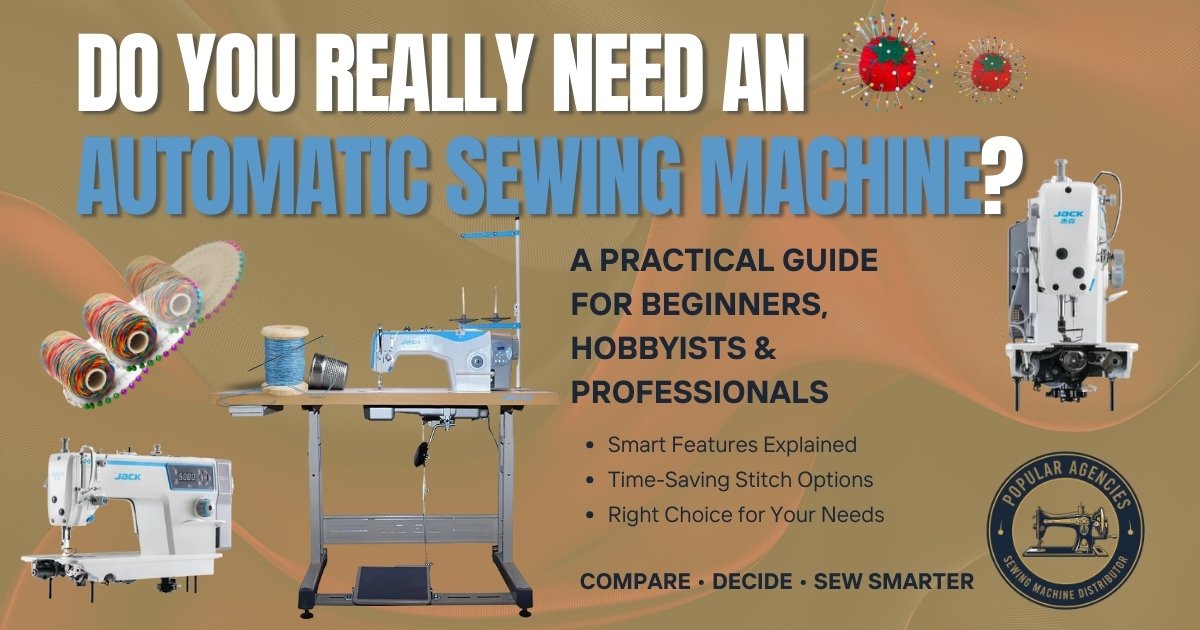
Do You Really Need an Automatic Sewing Machine? A Practical Guide
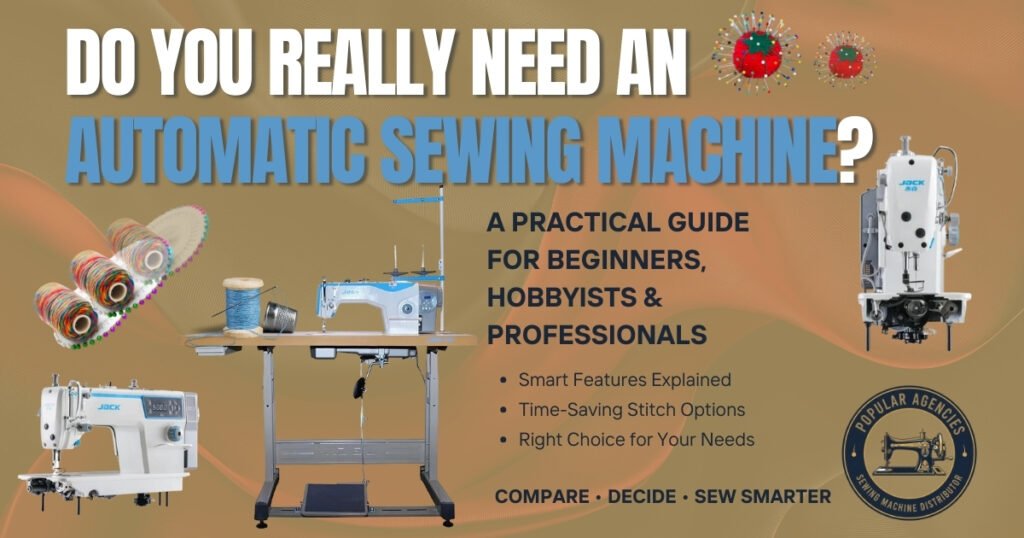
Walk into any sewing machine showroom or browse online, and one phrase appears everywhere: “automatic sewing machine.”
It sounds modern, advanced, and tempting. Naturally, many people assume that an automatic sewing machine is better, faster, or even necessary to learn sewing properly.
But here’s the honest truth:
Not everyone actually needs an automatic sewing machine.
This guide breaks down what “automatic” really means, who truly benefits from it, and when a regular machine might be the smarter choice—without sales pressure or technical overload.
What Is an Automatic Sewing Machine?
An automatic sewing machine refers to a machine that includes built-in automated functions designed to reduce manual effort. These may include:
- Automatic needle threading
- Automatic stitch selection
- One-step buttonhole creation
- Preset stitch length and width
- Speed control settings
Unlike manual or basic electric machines, automatic models handle many adjustments internally, making stitching smoother and more consistent.
However, automatic does not mean computerized in every case. Many automatic machines are still mechanical or semi-electronic, just with added convenience features.
What Automatic Sewing Machines Actually Do (In Real Life)
Automatic sewing machines are designed to:
- Reduce setup time
- Minimize manual adjustments
- Improve consistency
- Make stitching less tiring during long sessions
They don’t make you a better tailor overnight—but they remove small frustrations that slow people down.
For example:
- You don’t struggle to thread the needle repeatedly
- Buttonholes are uniform instead of uneven
- Stitch selection becomes quicker and less confusing
These benefits matter—but only after a certain stage of learning.
Automatic vs Non-Automatic Sewing Machines: The Real Difference
Let’s simplify this.
A Basic Sewing Machine:
- Teaches you how stitching works
- Requires manual stitch selection
- Helps you understand fabric behavior
- Builds strong fundamentals
An Automatic Sewing Machine:
- Reduces repetitive tasks
- Improves efficiency
- Offers consistent results
- Saves time during frequent stitching
Neither is “better” universally. The right choice depends on how and why you sew.
Who Actually Needs an Automatic Sewing Machine?
1. People Who Sew Frequently
If sewing is part of your daily or weekly routine, automatic features quickly become valuable. They:
- Save time
- Reduce fatigue
- Improve output consistency
For frequent stitchers, automation isn’t luxury—it’s efficiency.
2. Home Tailors Managing Multiple Garments
When you stitch multiple clothes at once, automatic stitch settings and buttonholes speed up work significantly.
Small conveniences add up when volume increases.
3. Boutique Owners & Custom Designers
Boutique work demands:
- Clean finishing
- Uniform stitches
- Reliable output
Automatic machines help maintain quality even during long hours.
4. Users Who Struggle with Manual Adjustments
Some people enjoy sewing but find manual threading, tension adjustment, or stitch selection frustrating. For them, automation reduces mental load and improves confidence.
Who Does NOT Need an Automatic Sewing Machine (Yet)?
This is equally important.
Beginners Learning from Scratch
If you are new to sewing:
- Manual machines teach fundamentals better
- You understand stitch control, fabric response, and tension
- You build problem-solving skills
Starting with too much automation can actually slow learning, not speed it up.
Occasional Users
If you sew once in a while—for repairs, hemming, or basic alterations—a simple machine is often more practical and cost-effective.
Budget-Conscious Buyers
Automatic machines cost more. If your sewing needs are basic, that extra investment may not bring real value immediately.
Common Misconceptions About Automatic Sewing Machines
“Automatic machines are only for professionals”
Not true. Many home users benefit from them.
“You can’t learn sewing properly on automatic machines”
Also false. You can learn—but fundamentals are easier to grasp on simpler machines.
“Automatic machines never need skill”
Wrong. Skill still matters. Automation assists—it doesn’t replace technique.
When Should You Upgrade to an Automatic Sewing Machine?
You should seriously consider upgrading if:
- You sew regularly and feel slowed down by manual tasks
- Buttonholes and stitch consistency matter to you
- You’re comfortable with basic sewing concepts
- Your projects are becoming more detailed or frequent
Automation works best after you understand what it’s automating.
Automatic Sewing Machines for Beginners: Good or Bad?
Here’s a balanced answer.
They are not bad for beginners, but they are not necessary either.
Some beginners feel more confident with automation because:
- The machine feels easier to control
- Results look better early on
Others learn faster on manual machines because:
- They understand cause and effect
- They fix mistakes independently
There’s no universal rule—just awareness.
The Right Question to Ask Yourself
Instead of asking:
“Is an automatic sewing machine better?”
Ask:
“Will automation solve a problem I currently have?”
If the answer is yes—upgrade confidently.
If the answer is no—learn more before spending more.
Final Thoughts: Is an Automatic Sewing Machine Worth It?
An automatic sewing machine is not about status or modernity.
It’s about workflow, comfort, and efficiency.
For some users, automation transforms sewing into a smoother, more enjoyable experience. For others, it adds unnecessary complexity.
The smartest sewing machine choice is not the most advanced one—it’s the one that matches your current stage and goals.
When your skills and stitching volume grow, automation naturally starts to make sense.




Add comment