

Common Issues with UME Embroidery Machines & How to Troubleshoot Them
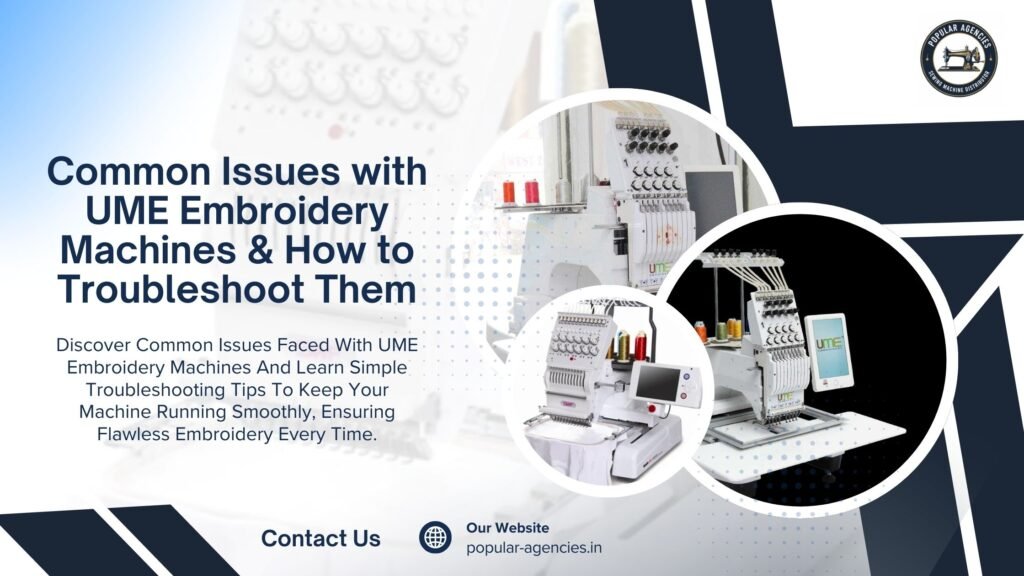
UME embroidery machines are known for their precision, speed, and reliability, making them a popular choice for boutiques, designers, and small embroidery units. But like any advanced computerized machine, occasional issues can occur when settings are off, maintenance is skipped, or accessories are not used correctly.
The good news? Most UME embroidery machine problems are easy to diagnose and quick to fix when you understand the root cause.
Below are the most common issues users encounter with UME embroidery machines—and how to troubleshoot them like a pro.
1. Thread Breakage During Embroidery
Thread breakage is one of the most frequent complaints among embroidery users. It usually happens due to tension imbalance, poor-quality thread, or incorrect needle choice.
How to Fix It
- Re-thread the machine completely.
- Use high-quality embroidery thread and avoid old or brittle thread.
- Check needle size and replace it if it’s bent or dull.
- Reduce the machine speed for delicate or metallic threads.
- Clean any lint buildup near the tension discs.
This issue is easy to solve once threading and tension are corrected.
2. Needle Breakage or Frequent Needle Damage
Needle breakage occurs when the hoop is not placed correctly, the fabric is too tight, or the design density is too high.
How to Fix It
- Ensure the embroidery hoop is securely locked and not touching the needle.
- Reduce design density if stitches are too packed.
- Use the correct needle for the fabric and thread.
- Check for bent needles and replace them immediately.
Correct hoop setup alone prevents most needle-related issues.
3. Skipped Stitches
Skipped stitches affect the design’s finish and usually indicate a problem with threading, tension, or the needle.
How to Fix It
- Re-insert the needle correctly (flat side facing the right direction).
- Re-thread both top and bobbin threads.
- Check that the fabric is hooped firmly but not overstretched.
- Slow down machine speed for stretchy fabrics.
- Lubricate the hook area if it feels dry.
A properly threaded machine almost always resolves skipped stitches.
4. Design Misalignment or Shifting
Designs may shift when the hoop slips, fabric isn’t stabilized enough, or the machine isn’t on a firm surface.
How to Fix It
- Use the right stabilizer for your fabric (tear-away, cut-away, or water-soluble).
- Ensure the hoop is tightened firmly without wrinkling the fabric.
- Place the machine on a stable, vibration-free table.
- Recalibrate the start point before beginning the job.
A correctly hooped fabric is the key to perfect alignment.
5. Bobbin Thread Showing on the Top Side
This is usually caused by upper-thread tension being too tight or bobbin tension being too loose.
How to Fix It
- Lower the upper thread tension gradually.
- Ensure the bobbin is wound evenly and placed correctly.
- Clean lint from the bobbin case and path.
- Use good-quality bobbin thread designed for embroidery.
Balanced tension creates smooth, uniform stitches.
6. Machine Freezing or Stopping Mid-Design
Computerized machines may freeze due to software issues, memory overload, or loose cables.
How to Fix It
- Power off the machine and restart it after a few seconds.
- Check USB pen drive compatibility—use only recommended formats.
- Remove corrupted or oversized design files.
- Ensure the machine’s power cable and data cables are securely connected.
If freezes continue, updating firmware may be required.
7. Loud Noise or Unusual Vibration
UME machines generally run quietly. Noise indicates loose screws, dried internal parts, or buildup around moving components.
How to Fix It
- Tighten visible screws on the needle plate and embroidery unit.
- Clean the hook area thoroughly.
- Ensure proper lubrication as recommended by the manufacturer.
- Place the machine on a sturdy table to prevent vibration amplification.
Regular cleaning keeps the machine running smoothly and quietly.
Final Thoughts
UME embroidery machines are built for durability and high-quality performance, but like all computerized tools, they need proper care and correct settings to function at their best. Most problems—thread breaks, skipped stitches, misalignment, or noise—are simple to fix with basic maintenance and adjustments.
With the right troubleshooting steps, you can resolve issues quickly and keep your embroidery business running without interruptions.
For genuine UME embroidery machines with warranty, free demo, installation, and after-sales support, explore the range at Popular Agencies, trusted across Vellore, Ranipet, Tirupathur, Tiruvannamalai, and Chittoor.
FAQs
1. Why does my UME embroidery machine frequently break thread?
Thread breakage usually happens due to incorrect tension, poor-quality thread, or a bent needle. Re-thread the machine completely, clean the tension discs, and use good-quality embroidery thread to reduce breakage.
2. How do I fix skipped stitches on a UME embroidery machine?
Skipped stitches are often caused by incorrect needle placement, loose hooping, or improper threading. Re-insert the needle correctly, re-thread the top and bobbin thread, and ensure the fabric is hooped firmly.
3. Why is my embroidery design shifting or becoming misaligned?
Misalignment occurs when the hoop isn’t tight enough or the stabilizer is insufficient. Use the correct stabilizer for each fabric type, tighten the hoop, and ensure the machine is placed on a stable surface.
4. My machine stops mid-design. What should I do?
A UME machine may freeze due to large design files, corrupted USB data, or loose cables. Restart the machine, remove problematic designs, and use only compatible USB drives. Ensure all power and data cables are firmly connected.
5. How often should I maintain or service my UME embroidery machine?
Basic cleaning should be done after every session, while professional servicing is recommended every 6–12 months depending on usage. Regular lubrication (as recommended by UME) ensures smooth and long-lasting performance.







Add comment