
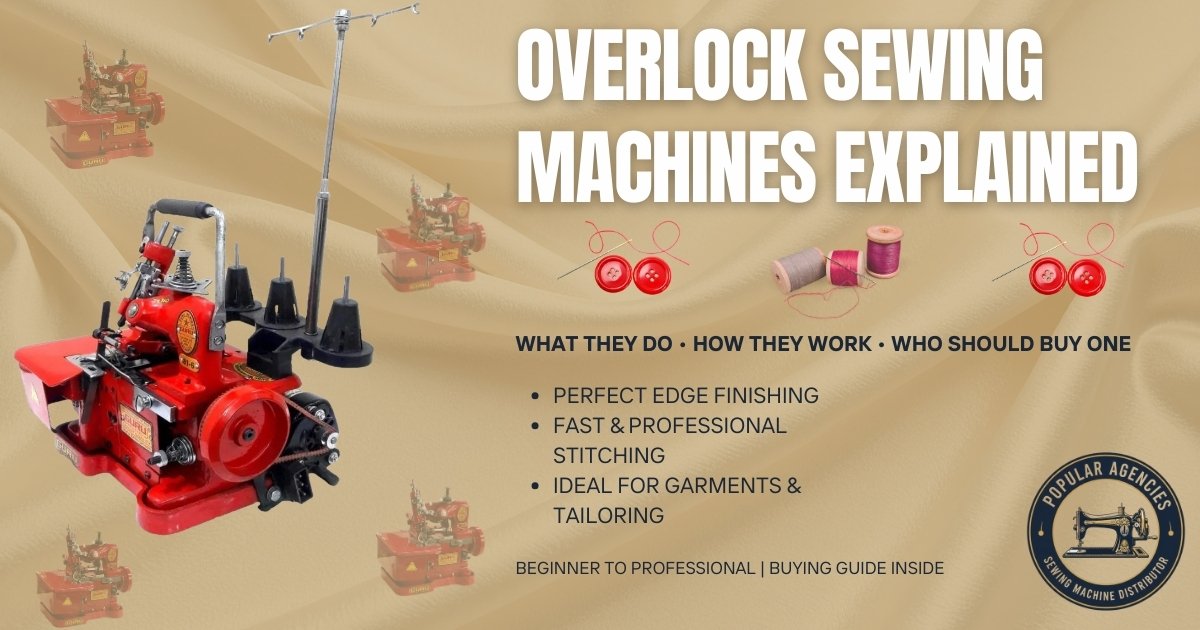
Overlock Sewing Machines Explained: What They Do & Who Should Buy One
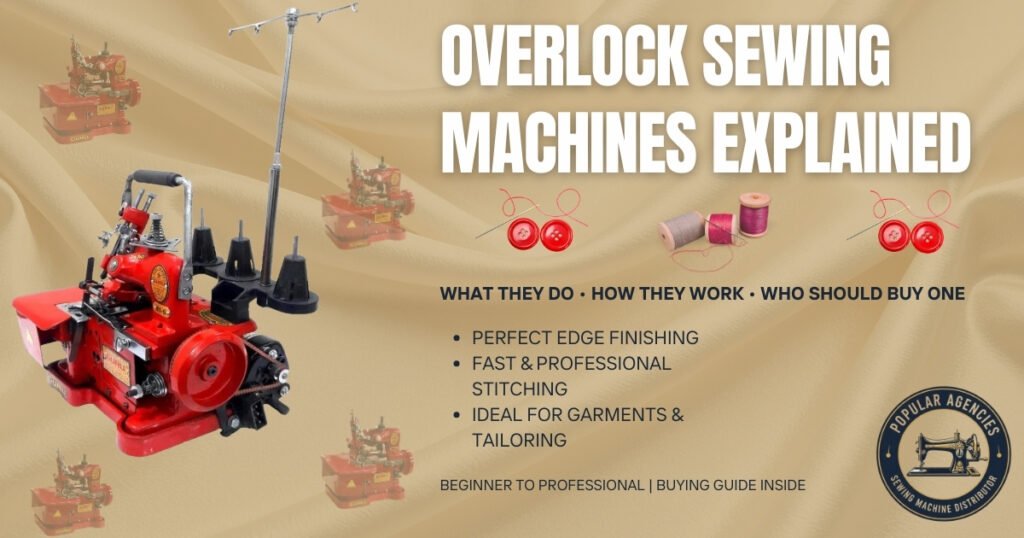
If you’ve ever admired the clean, professional edges on store-bought garments and wondered how tailors achieve that finish, the answer is often an overlock sewing machine. For many beginners and even experienced home stitchers, overlock machines remain confusing—some think they’re optional, others assume they’re only for factories.
In reality, overlock sewing machines play a very specific and powerful role in stitching. This guide explains what overlock machines actually do, how they differ from regular sewing machines, and who truly benefits from owning one—without technical jargon or sales talk.
What Is an Overlock Sewing Machine?
An overlock sewing machine, often called a serger, is designed to trim fabric edges, stitch them, and secure them in one continuous operation. Unlike a regular sewing machine that mainly joins fabric pieces together, an overlock machine focuses on edge finishing.
Its primary purpose is to:
- Prevent fabric from fraying
- Create strong, stretch-friendly seams
- Give garments a neat, professional look
This is why overlock stitching is commonly seen on the inside of T-shirts, leggings, kidswear, sportswear, and ready-made garments.
What Does an Overlock Sewing Machine Do Exactly?
An overlock machine performs three actions at the same time:
1. Trims the Fabric Edge
As the fabric passes through the machine, a built-in blade cuts off excess fabric. This keeps edges clean and uniform without needing scissors.
2. Stitches the Edge
Using multiple threads (usually 3 or 4), the machine wraps stitches around the fabric edge, locking it securely.
3. Prevents Fraying
The looped stitching protects the fabric edge from unraveling, even after repeated washing.
This combination is something a normal sewing machine cannot replicate efficiently, no matter how skilled the tailor is.
How Is an Overlock Machine Different from a Regular Sewing Machine?
This is one of the most common questions people ask.
A regular sewing machine:
- Joins fabric pieces together
- Is used for straight stitching, zigzag, buttonholes, decorative work
- Is essential for garment construction
An overlock sewing machine:
- Finishes fabric edges
- Strengthens seams
- Adds stretch and durability
- Improves garment longevity and appearance
Think of it this way:
A regular sewing machine builds the garment
An overlock machine perfects and strengthens it
Most professional tailors use both, not one instead of the other.
Types of Overlock Sewing Machines
Understanding types helps you decide whether you actually need one.
3-Thread Overlock Machines
- Ideal for basic edge finishing
- Common in tailoring shops and home tailoring
- Suitable for lightweight to medium fabrics
4-Thread Overlock Machines
- Adds an extra row of stitching for strength
- Great for seams that need durability
- Preferred for garments that stretch or face frequent wear
Some advanced models offer more thread options, but for most users, 3-thread or 4-thread machines are more than sufficient.
What Fabrics Benefit Most from Overlock Stitching?
Overlock machines shine when working with:
- Cotton fabrics
- Knit fabrics
- Jersey materials
- Lycra and stretch fabrics
- Synthetic blends
- Kidswear and daily-wear garments
If you frequently stitch clothes that are worn, washed, and stretched regularly, an overlock machine significantly improves durability.
Who Should Buy an Overlock Sewing Machine?
Let’s be honest—not everyone needs one. Here’s who truly benefits.
1. Tailoring Shop Owners
If you run a tailoring shop, an overlock machine is not a luxury—it’s a productivity tool. It:
- Saves time on edge finishing
- Improves garment quality
- Meets customer expectations for professional finish
2. Boutique Owners
Boutiques that design custom garments benefit greatly from overlock machines. Finished seams elevate the overall look and make garments feel premium.
3. Home Stitchers Who Sew Regularly
If sewing is more than an occasional hobby and you frequently stitch clothes for family or clients, an overlock machine:
- Reduces manual work
- Improves learning outcomes
- Makes garments last longer
4. Anyone Working with Stretch Fabrics
Stretch fabrics are difficult on regular machines. Overlock machines handle them smoothly without thread breakage or seam damage.
Who Does NOT Need an Overlock Machine (Yet)?
You may not need an overlock machine if:
- You only do occasional repairs
- You stitch simple items like pillow covers or curtains
- You are still learning basic stitching techniques
- Your sewing volume is very low
In such cases, a good regular sewing machine is enough—for now.
Common Myths About Overlock Sewing Machines
“Overlock machines replace normal sewing machines”
False. They complement each other.
“They are too complicated”
Modern overlock machines are much easier to operate than people think, especially after basic guidance.
“Only factories use them”
Many home tailors and boutiques use compact overlock machines daily.
Signs You’re Ready to Upgrade to an Overlock Machine
You might be ready if:
- You spend too much time finishing edges manually
- Your garments fray after washing
- Customers comment on inside finishing
- You’ve started sewing regularly or professionally
At this stage, an overlock machine doesn’t just improve quality—it improves confidence.
Final Thoughts: Is an Overlock Sewing Machine Worth It?
An overlock sewing machine is not about stitching more—it’s about stitching better.
If clean edges, strong seams, and professional-quality garments matter to you, an overlock machine becomes a valuable addition to your sewing setup. It’s especially worthwhile for tailors, boutique owners, and serious home stitchers who want their work to stand out.
Rather than asking “Do I need an overlock machine?”, a better question is:
“Has my stitching reached a point where finishing quality matters?”
When the answer is yes, an overlock sewing machine is the natural next step.




Add comment