
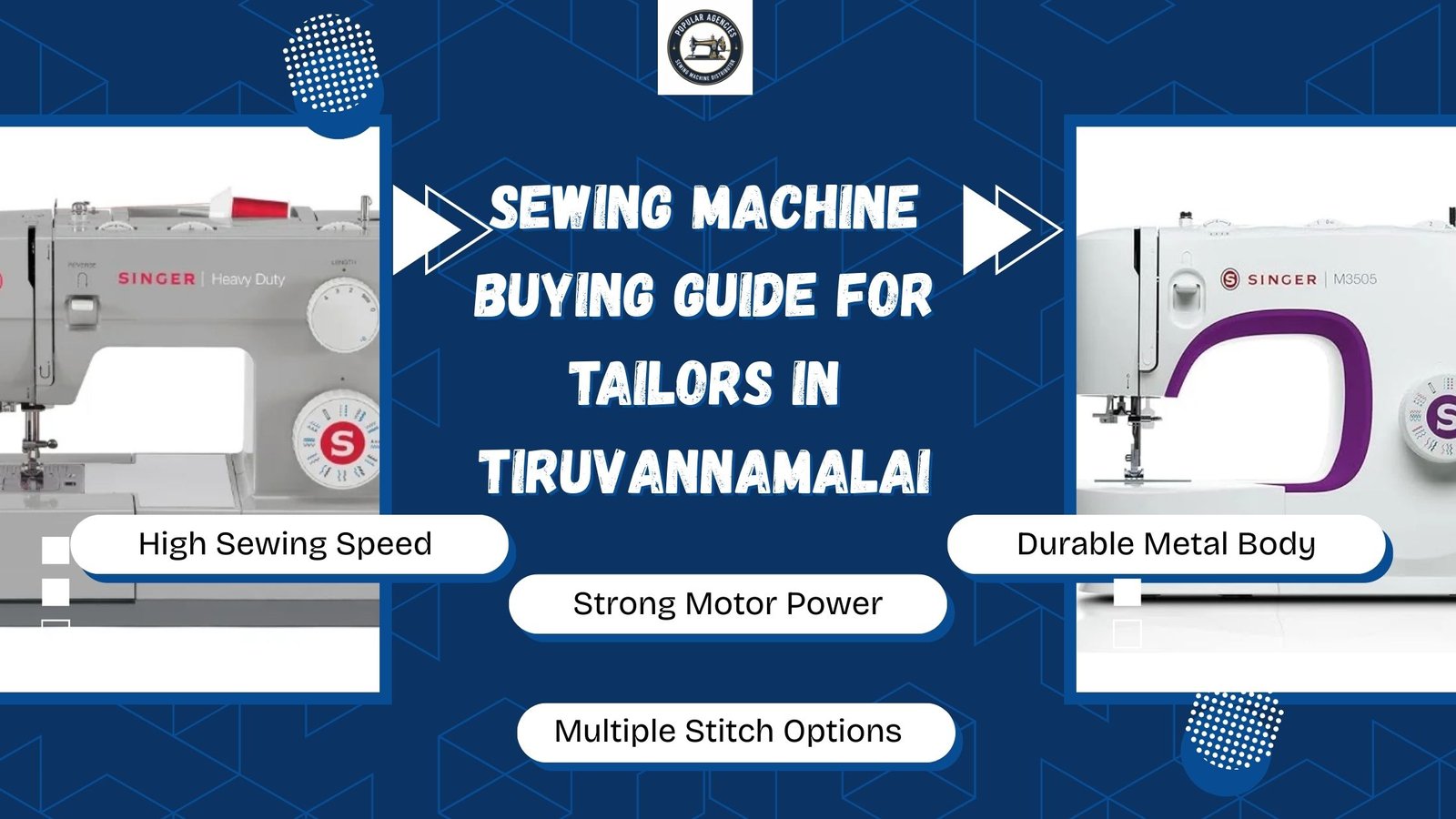
Sewing Machine Buying Guide for Tailors in Tiruvannamalai
For tailors running or planning to start a tailoring shop in Tiruvannamalai, selecting the right sewing machine is one of the most important decisions. A sewing machine directly influences stitching quality, speed, and how efficiently a tailoring shop can handle daily garment work.
Many beginners buy a sewing machine based only on price or brand popularity. However, professional tailoring requires machines that can run for long hours, handle different fabrics, and produce consistent stitches without frequent interruptions.
This guide explains how tailors in Tiruvannamalai can choose the right sewing machine, what types of machines are commonly used in tailoring shops, and what factors should be considered before purchasing.
Why Choosing the Right Sewing Machine Matters for Tailors
Tailoring work involves more than occasional stitching. A tailoring shop may produce several garments in a single day, including shirts, trousers, blouses, school uniforms, and custom clothing.
Because of this workload, tailors require machines that offer:
- Consistent stitch quality
- Reliable operation during long working hours
- Capability to handle different fabrics
- Smooth and stable stitching speed
Using the wrong sewing machine often leads to slower work, machine breakdowns, and inconsistent garment finishing.
Types of Sewing Machines Used by Tailors
Most tailoring shops do not rely on a single machine. Instead, they use different machines designed for specific tasks during garment construction.
Straight Stitch Industrial Sewing Machine
The most essential machine for any tailoring shop is the straight stitch industrial sewing machine. This machine performs the majority of stitching tasks such as assembling garment panels, stitching sleeves, and constructing seams.
Industrial straight stitch machines are preferred because they offer:
- High stitching speed
- Durable motors for daily use
- Stable stitch formation
- Long operating life
For tailors in Tiruvannamalai who handle regular garment work, this machine is usually the first and most important investment.
Overlock Sewing Machine
An overlock sewing machine is used to finish fabric edges and prevent fraying. Professional garments require proper seam finishing to improve durability and appearance.
Overlock machines are commonly used for:
- Edge finishing
- Knitwear stitching
- Stretch fabric garments
- Seam reinforcement
Many tailoring shops use 3-thread or 4-thread overlock machines depending on the type of work they handle.
Zig-Zag Sewing Machine
A zig-zag sewing machine adds flexibility to a tailoring shop. While straight stitch machines handle most seams, zig-zag machines allow tailors to work on elastic attachment, decorative stitching, and certain types of reinforced seams.
Tailors who handle a wide range of garments often include zig-zag machines in their shop setup.
Buttonhole Sewing Machine
For shops producing shirts, uniforms, or formal garments regularly, a buttonhole sewing machine improves efficiency. Instead of creating buttonholes manually, automatic buttonhole machines produce consistent results quickly.
Although not necessary for every tailoring shop initially, this machine becomes valuable as production increases.
Best Sewing Machine Setup for a Small Tailoring Shop
For someone starting a tailoring shop in Tiruvannamalai, a practical setup usually includes:
- Straight stitch industrial sewing machine – main garment construction
- Overlock sewing machine – edge finishing and seam reinforcement
- Zig-zag sewing machine (optional initially) – versatile stitching tasks
This combination allows a tailoring shop to complete most garment production tasks efficiently.
As the business grows, additional machines such as buttonhole machines or embroidery machines can be added.
Factors Tailors Should Consider Before Buying a Sewing Machine
Selecting the right sewing machine involves more than choosing a brand. Tailors should evaluate several practical factors before purchasing.
Daily Workload
If the shop handles multiple garments per day, an industrial sewing machine is usually necessary for reliability and speed.
Fabric Types
Tailors working with different materials—such as cotton, denim, or stretch fabrics—must ensure their machines can handle those fabrics effectively.
Motor Type
Modern direct drive sewing machines offer smoother operation and reduced vibration compared to older clutch motor machines. Many tailoring shops prefer them for better energy efficiency and quieter operation.
Machine Stability
A stable machine setup reduces vibration and improves stitch consistency during long sewing sessions.
Service and Maintenance Support
Access to service technicians and maintenance support is important for machines used daily in tailoring shops.
Common Mistakes Tailors Make When Buying Sewing Machines
Many tailoring professionals make purchasing decisions without considering their long-term needs.
Some common mistakes include:
- Buying domestic machines for professional workloads
- Choosing machines without checking service availability
- Selecting machines with unnecessary features instead of focusing on durability
- Ignoring workspace requirements for industrial machines
Avoiding these mistakes helps tailors invest in equipment that supports their business growth.
Why Local Availability Matters for Tailors
Tailors in Tiruvannamalai benefit from buying sewing machines locally rather than purchasing online without support.
Buying from a trusted sewing machine showroom allows tailors to:
- Understand machine operation before purchase
- Receive guidance on machine selection
- Access service and maintenance support
- Get assistance with installation and setup
For professionals who rely on machines daily, local support can make a significant difference.
Conclusion
Choosing the right sewing machine is essential for tailors in Tiruvannamalai who want to maintain efficient workflows and produce high-quality garments. A professional tailoring setup usually begins with a straight stitch industrial machine and an overlock machine, with additional machines added as business demands grow.
By understanding machine types, fabric requirements, and workload expectations, tailors can invest in sewing machines that support their craft and ensure long-term reliability.
A well-chosen sewing machine setup is not just a purchase—it is a foundation for a successful tailoring business.
FAQs
What is the best sewing machine for tailoring shops in Tiruvannamalai?
A straight stitch industrial sewing machine is usually the most important machine for tailoring shops because it handles most garment stitching tasks.
Can a domestic sewing machine be used for tailoring work?
Domestic machines may work for light stitching but are not designed for continuous professional workloads.
Why do tailors use overlock sewing machines?
Overlock machines finish fabric edges and prevent fraying, giving garments a professional and durable finish.
How many sewing machines does a tailoring shop need?
Most small tailoring shops start with two machines: a straight stitch industrial machine and an overlock machine.
Are direct drive sewing machines better for tailoring shops?
Direct drive machines offer smoother operation, reduced vibration, and better energy efficiency, making them popular in tailoring shops.
Where should tailors buy sewing machines in Tiruvannamalai?
Buying from a trusted sewing machine showroom ensures access to genuine machines, guidance, and service support.





Add comment