
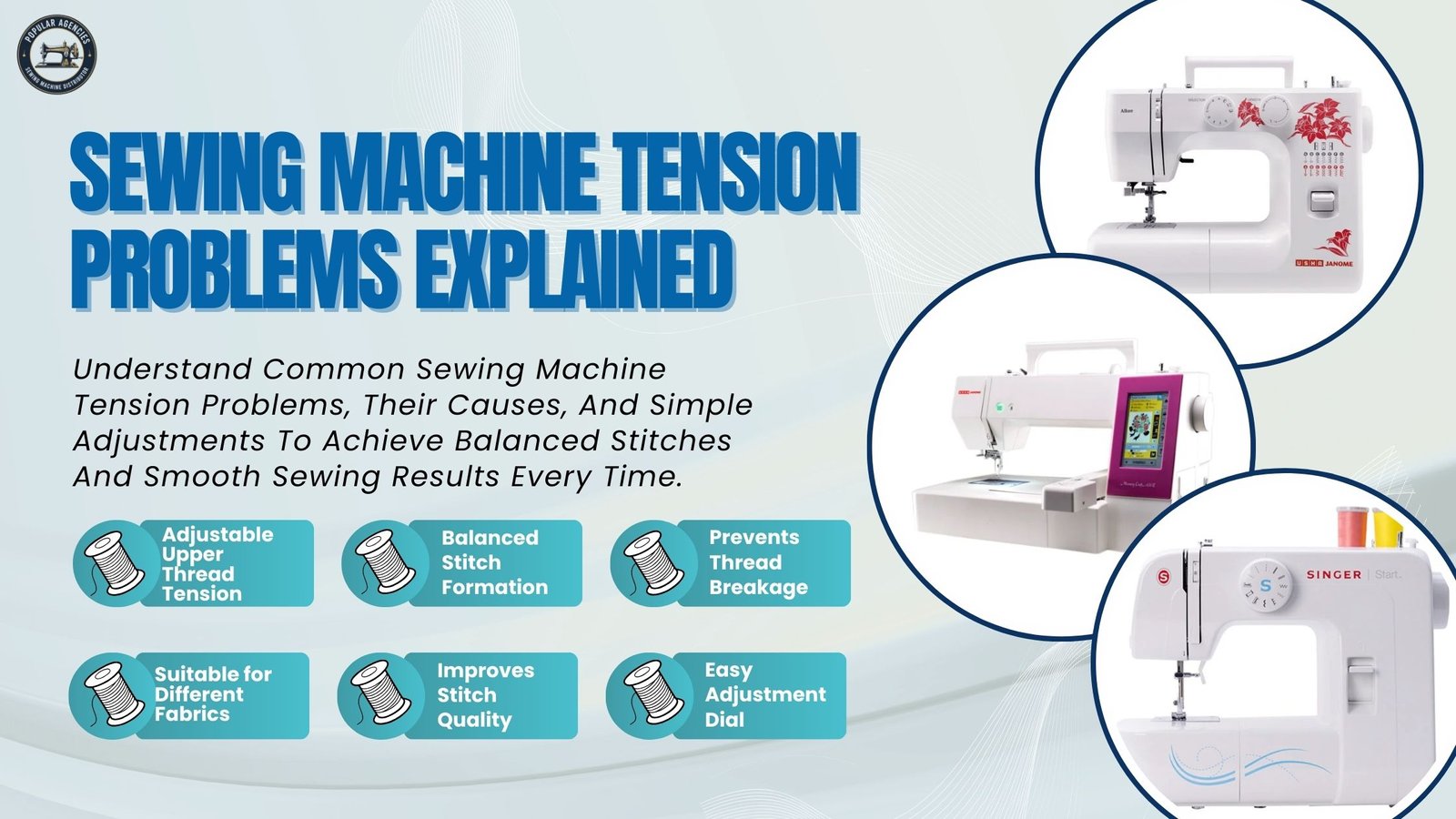
Sewing Machine Tension Problems Explained
One of the most common issues faced by both beginners and experienced tailors is sewing machine tension problems. When the thread tension is not balanced correctly, stitches may appear loose, uneven, or tangled. In many cases, people assume their sewing machine is malfunctioning when the real problem is simply improper tension settings.
Thread tension controls how tightly the upper thread and bobbin thread interlock within the fabric. When this balance is correct, the stitches appear neat and consistent on both sides of the fabric. But when the tension is too tight or too loose, stitching quality suffers.
Understanding sewing machine tension and how to adjust it can help you solve many common stitching problems quickly.
What Is Sewing Machine Thread Tension?
Thread tension refers to the pressure applied to the sewing thread as it passes through the machine. A sewing machine uses two threads:
- The upper thread, which comes from the spool
- The bobbin thread, which comes from the bobbin case
During stitching, these two threads meet inside the fabric to form a lockstitch. Proper tension ensures that the threads interlock neatly within the fabric layers rather than pulling to the top or bottom.
When tension is correctly balanced, stitches look smooth and uniform on both sides of the fabric.
Signs of Sewing Machine Tension Problems
Recognizing the symptoms of tension issues helps you diagnose the problem quickly.
Loose Stitches on the Fabric Surface
If loops of thread appear on the top of the fabric, the bobbin thread may be pulling too tightly or the upper thread tension may be too loose.
Loops on the Fabric Underside
When loops appear underneath the fabric, the upper thread tension is usually too loose.
Fabric Puckering
Excessively tight tension can cause the fabric to wrinkle or pucker during stitching.
Frequent Thread Breakage
If thread tension is too tight, the thread may snap during sewing.
Uneven Stitch Formation
Poor tension balance can lead to inconsistent stitch patterns that weaken seams.
Common Causes of Sewing Machine Tension Problems
Thread tension issues often result from small mistakes in machine setup rather than mechanical failure.
Incorrect Threading
One of the most common reasons for tension problems is incorrect threading. If the thread does not pass through all tension discs or guides properly, tension control will not function correctly.
Always rethread the machine carefully if tension problems appear.
Improper Bobbin Placement
If the bobbin is not inserted correctly or if the bobbin case tension is off, the machine may produce uneven stitches.
Ensure the bobbin rotates in the correct direction and the thread is properly seated in the tension slot.
Using the Wrong Needle
The sewing machine needle also influences tension. A bent or incorrect needle may cause skipped stitches or tension imbalance.
Using the correct needle size and type for the fabric helps maintain smooth stitching.
Poor Quality Thread
Low-quality thread can cause inconsistent tension because it may stretch, break, or produce uneven stitching.
Using reliable thread designed for machine sewing reduces tension-related issues.
Dirty Machine Components
Dust, lint, and thread fragments can build up around the tension discs and bobbin area, interfering with smooth thread movement.
Regular cleaning helps maintain proper tension performance.
How to Adjust Sewing Machine Thread Tension
Before adjusting tension settings, it is important to test the machine properly.
Step 1: Check Threading
Completely remove the thread and rethread the machine, ensuring the thread passes through every guide and tension disc correctly.
Step 2: Check the Needle
Replace the needle with a new one appropriate for the fabric type. Even slightly bent needles can affect tension.
Step 3: Test Stitch on Scrap Fabric
Use a small piece of the same fabric to test stitch quality before adjusting tension.
Step 4: Adjust Upper Thread Tension
Most sewing machines have a tension dial. If loops appear on the underside of the fabric, increase the tension slightly. If loops appear on top, reduce the tension.
Make small adjustments and test after each change.
Step 5: Check Bobbin Tension (If Needed)
Bobbin tension usually remains fixed in most machines. However, if the problem persists, checking the bobbin case tension may be necessary.
In many cases, correcting the upper thread tension resolves the issue.
Preventing Sewing Machine Tension Problems
Good sewing habits can prevent tension problems before they occur.
Use Correct Thread and Needle
Matching the thread and needle to the fabric type ensures smoother stitch formation.
Keep the Machine Clean
Removing lint and dust regularly helps maintain proper tension performance.
Replace Needles Frequently
Dull or bent needles can interfere with stitch formation and thread tension.
Test Before Starting a Project
Always stitch a small test seam on scrap fabric before working on the final garment.
Why Balanced Tension Is Important for Tailoring
In tailoring shops and garment production environments, stitch quality directly affects garment durability and appearance. Poor tension settings can weaken seams, cause fabric damage, or slow down production.
Balanced thread tension ensures:
- Clean seam appearance
- Strong stitch formation
- Reduced thread breakage
- Smooth sewing machine operation
For professionals handling daily stitching workloads, understanding tension adjustments is essential.
Conclusion
Sewing machine tension problems are among the most common stitching issues, but they are usually easy to fix once the cause is identified. Proper threading, correct needle selection, and balanced tension settings can restore smooth stitching in most situations.
By learning how thread tension works and practicing simple adjustments, both beginners and professional tailors can maintain consistent stitch quality and improve their overall sewing results.
FAQs
What causes sewing machine tension problems?
Common causes include incorrect threading, wrong needle type, poor-quality thread, and lint buildup inside the machine.
How do I know if my sewing machine tension is too tight?
If the fabric puckers or the thread frequently breaks, the tension may be too tight.
Why are there loops on the underside of my fabric?
Loops underneath usually indicate that the upper thread tension is too loose.
Should I adjust the bobbin tension first?
In most cases, adjusting the upper thread tension is sufficient. Bobbin tension adjustments are rarely needed.
Can a dull needle cause tension problems?
Yes. A worn or bent needle can interfere with proper stitch formation.
How often should I check sewing machine tension?
It is good practice to test tension settings whenever switching fabric types or starting a new project.






Add comment