
Table of Contents
- The Mechanical Dilemma of Sewing Thick Leather and Canvas
- Understanding the Single-Needle Lockstitch and Drop Feed Limits
- Why the Heavy-Duty Walking Foot Machine Dominates Dense Slabs
- Direct Comparison: Material Thickness vs. Feed Type
- Sourcing Reliable Heavy-Material Machinery for Local Workshops
- Upgrade Your Production Infrastructure with Popular Agencies
The Mechanical Dilemma of Sewing Thick Leather and Canvas
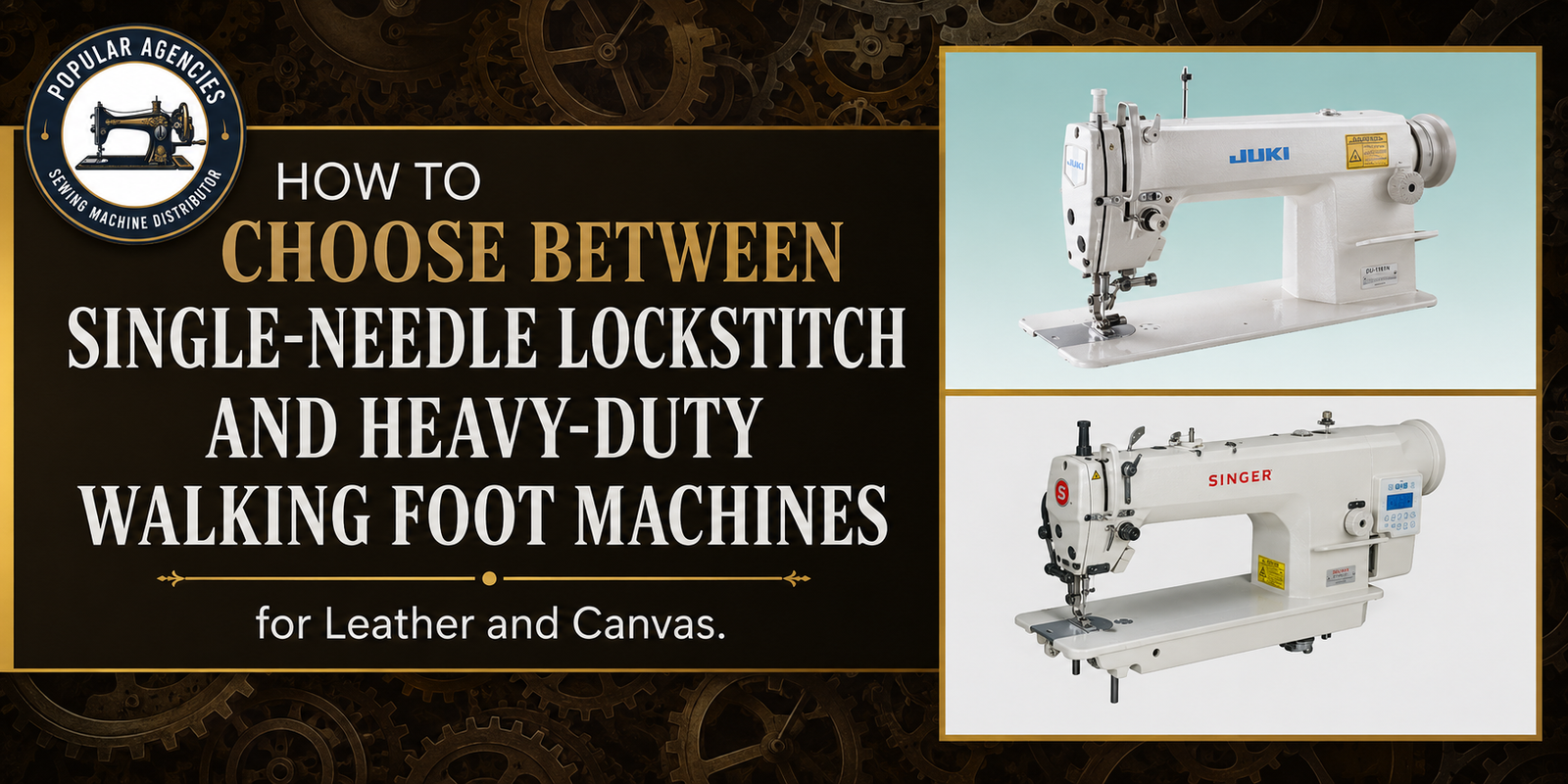
Analyzing the performance of a single-needle lockstitch vs walking foot machine is a vital step for fast-growing upholstery shops, bag makers, and industrial garment hubs looking to upgrade their structural assemblies. When working with stubborn, high-friction, or multi-layered materials like oil-tanned leather, heavy marine canvas, dense webbing, and thick denim, the mechanical feed system of your machinery determines your final stitch quality.
Unlike lightweight woven cottons that flow effortlessly across a needle plate, heavy materials present severe physical resistance. Forcing an incompatible feed mechanism to tackle these dense layers results in immediate manufacturing defects, including uneven stitch lengths, severe material ply shifting, needle deflection, and frequent thread shredding that slows down overall workshop productivity.
Understanding the Single-Needle Lockstitch and Drop Feed Limits
Standard industrial single-needle lockstitch machines typically utilize a traditional drop-feed system. In this configuration, a set of bottom feed dogs rises up through the throat plate to pull the fabric backward, while a stationary presser foot holds the material down from above. This architecture is built for extreme high-speed straight stitching on light-to-medium apparel.
However, when analyzing a single-needle lockstitch vs walking foot setup for heavy work, drop-feed units reveal major limitations:
- Upper Layer Slippage: Because only the bottom layer is actively pulled by the feed dogs, the top layer of leather or canvas can easily drag, lag behind, or pucker, throwing off panel alignment.
- Stitch Binding & Drag Marks: The constant downward pressure from a rigid, stationary presser foot can leave unsightly scuffs, shiny drag lines, or marring marks on premium veg-tanned leather surfaces.
Why the Heavy-Duty Walking Foot Machine Dominates Dense Slabs
To eliminate the friction and traction issues inherent in drop-feed systems, integrating a true compound-feed walking foot machine into your production asset layout becomes mandatory. A walking foot machine features a dynamic upper mechanism consisting of two alternating presser feet operating in unison with the needle and bottom feed dogs.
As the machine operates, the inner presser foot clamps down on the material, and the needle pierces the fabric; then, the entire needle bar assembly, inner foot, and bottom feed dogs move backward together, sandwiching and transporting all plies of material at the exact same rate. This mechanical synchronization means that whether you are climbing over thick leather cross-seams or sewing bulky canvas straps, the layers never slide apart, maintaining perfectly uniform stitch lengths every time.
Direct Comparison: Material Thickness vs. Feed Type
To optimize your investment strategy, operators must cross-reference their primary product line with the proper machine capabilities. Choosing the wrong unit can overwork your motor or underutilize your assembly speeds.
| Material Context | Recommended Machine Choice | Key Advantage |
|---|---|---|
| Light Garment Leather / 1–2 Layers Canvas | Industrial Single-Needle Lockstitch (with Teflon Foot) | Higher operational speed and precision curves. |
| Heavy Veg-Tanned Leather, Tarps, Multi-Layer Canvas | Heavy-Duty Walking Foot (Compound Feed) | Zero ply shifting, high penetration torque. |
Sourcing Reliable Heavy-Material Machinery for Local Workshops
Selecting the perfect balance between a single-needle lockstitch vs walking foot machine involves looking at build quality, internal hook sizing (such as large capacity hooks for thick threads), and accessible technical maintenance. Sourcing heavy-duty configurations from globally established brands ensures that your internal timing gears, heavy needle bars, and tension assemblies hold up to rigorous industrial demands.
For professional guidance on setting up balanced assemblies, selecting genuine accessories, or diagnosing timing loop challenges on high-torque heavy-duty machinery, operators should follow the manufacturer’s recommended maintenance procedures and consult authorized service technicians or trusted regional distributors. This helps ensure accurate machine setup, reliable performance, and long-term durability in demanding industrial applications.
Upgrade Your Production Infrastructure with Popular Agencies
Your workshop’s daily throughput and aesthetic finish depend entirely on matching your fabric density to the correct feeding hardware. Don’t risk costly leather material wastage or continuous thread breaks with unverified third-party hardware configurations.
Ready to optimize your heavy-material assembly line? Our commercial experts are available to conduct live machinery demonstrations, explain the structural differences between single-needle lockstitch and walking foot machines based on your production requirements, and recommend the right industrial machinery, heavy-duty needles, and setup solutions for your workshop. With expert guidance and dependable after-sales support, you can confidently scale your operations while maintaining precision, efficiency, and long-term reliability.





Add comment