Table of Contents
The Importance of Matching Fabric Density to Needle Profiles
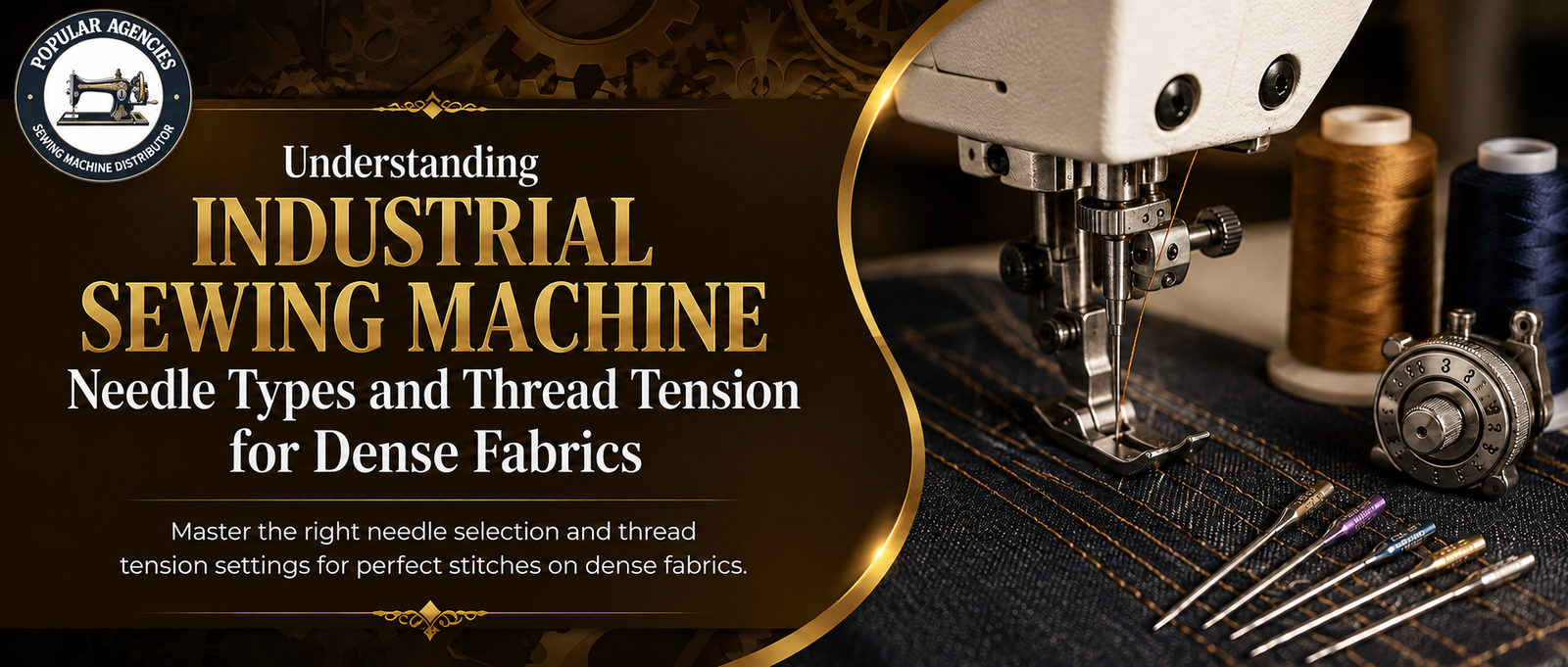
Choosing the right industrial sewing machine needle sizes is the absolute foundational step to ensuring clean seam lines, maximizing garment structural integrity, and preserving high-speed machinery health. Even the most advanced manufacturing equipment will produce substandard stitch quality if the specific needle profile fails to match your target material density. Standard domestic garment needles easily bend, deflect, or overheat when forced to pierce through commercial textiles like heavy canvas, thick leather, multi-layered synthetic sportswear, or non-woven industrial textiles. When a running needle struggles to smoothly penetrate dense structural layers, it immediately disrupts the critical mechanical timing loop between the needle eye and the rotary hook assembly. This structural delay results in rapid manufacturing defects like skipped stitches, frayed materials, or completely broken threads. Furthermore, incorrect configurations cause unsightly puckered seams that degrade retail garment value and slow down your overall workshop productivity. To maintain seamless operations on high-volume production lines, managers and machine operators must treat industrial sewing machine needle sizes as an essential element of their daily setup workflow. Matching the needle’s physical shaft strength and blade diameter to your material density avoids costly delays and reduces unnecessary mechanical wear on internal gears and needle bars.The Commercial Sewing Machine Needle Chart
To avoid structural fabric destruction and keep your factory floor running smoothly, operators must carefully cross-reference their raw materials with a verified sewing machine needle chart. Utilizing the exact recommended needle thickness ensures the blade can pass cleanly through the weave without making oversized punctures or flexing under high-speed impacts. As your production demands shift between lightweight delicate items and rugged canvas applications, the corresponding industrial sewing machine needle sizes must change accordingly. Below is a comprehensive reference matrix to help guide your standard production setups:| Fabric Classification | Singer / US Needle Size | Metric Size (Nm) |
|---|---|---|
| Light Fabrics (Silk, Chiffon, Organza) | Size 9 to 11 | 65 to 75 Nm |
| Medium Fabrics (Shirts, Cotton, Linens) | Size 14 | 90 Nm |
| Heavy Fabrics (Denim, Canvas, Tarpaulins) | Size 16 to 18 | 100 to 110 Nm |


Add comment