
Table of Contents
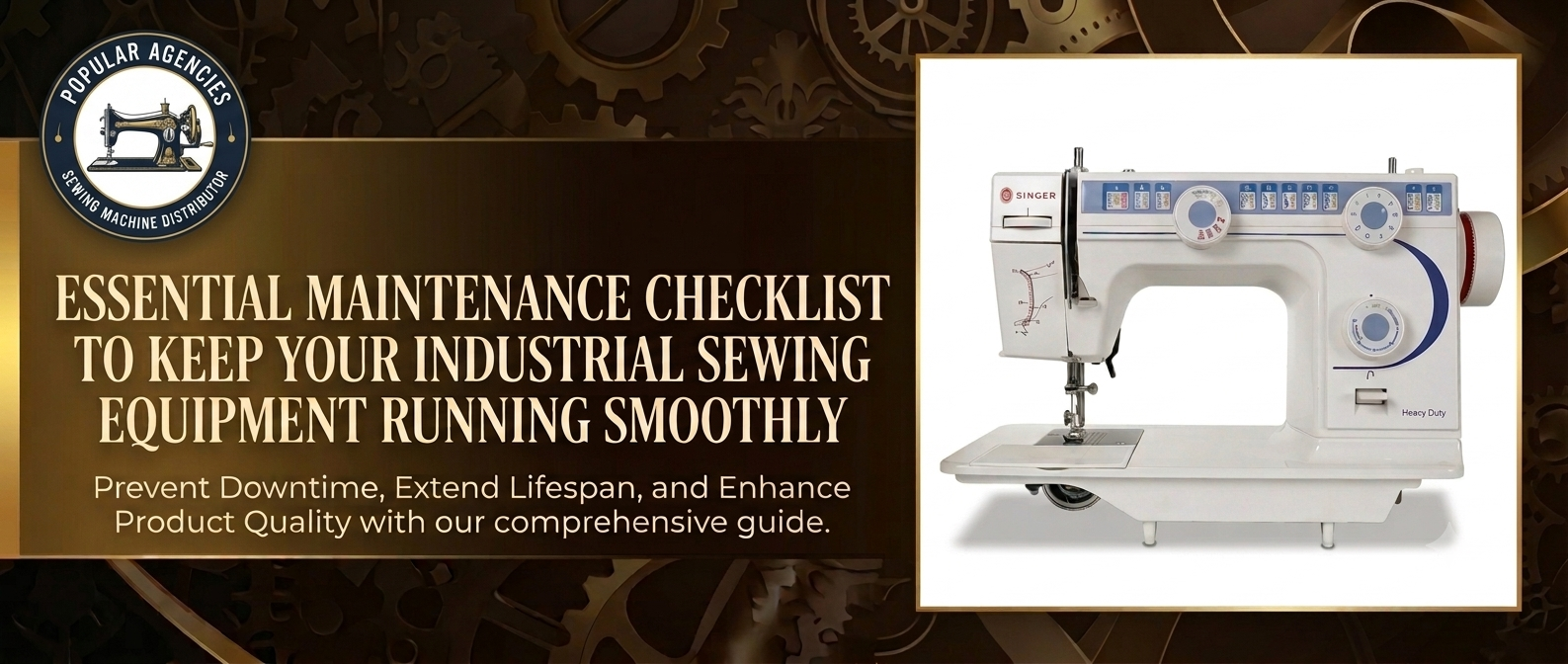
Essential Maintenance Checklist to Keep Your Industrial Sewing Equipment Running Smoothly
An industrial sewing machine maintenance service schedule is the ultimate preventative routine to maximize the operational life and profitability of your commercial sewing equipment. Unlike standard household mechanical models, heavy-duty industrial units run at high speeds—frequently reaching 3,000 to 5,500 stitches per minute. This intense activity generates massive structural friction and rapidly packs dense fabric dust into critical moving parts.
An unmaintained machine quickly develops issues like skipped stitches, frequent needle breaks, tension fluctuations, and premature gear wear. To keep your workshop humming and prevent costly production delays, implementing a structured internal protocol balanced by an expert industrial sewing machine maintenance service routine is absolutely essential.
The Operational Maintenance Blueprint
Dividing your workshop’s maintenance tasks into clear daily, weekly, and monthly routines keeps your hardware running at peak performance. Train your assembly line operators to follow this straightforward timeline:
| Frequency | Core Maintenance Tasks | Business Value |
|---|---|---|
| Daily Check | Perform thorough bobbin case lint removal and brush out under the needle plate and feed dogs. | Prevents packed lint jams, hook scratches, and bird-nesting thread clusters. |
| Weekly Check | Inspect the oil window reservoir. Learn how to oil sewing machine components and replenish lines with premium, clear white oil. | Slashes thermal friction wear on high-speed gears and eliminates line heat. |
| Monthly Check | Examine needle bars for minor warps, clean the upper thread tension discs, and inspect automatic cutting knives. | Maintains absolute needle entry precision and prevents structural fabric puckering. |
Critical Areas Focus: Lint & Lubrication
Why Bobbin Case Lint Removal Cannot Be Skipped
As materials pass over the feed dogs, thousands of microscopic fabric fibers break away and gather inside the shuttle hook race. If left uncleaned, this dust mixes with machine lubricant to form a dense, abrasive paste. This paste introduces drag into the hook rotation, directly causing skipped stitches and uneven bottom tensions. A quick 2-minute brush-out at the end of every shift completely eliminates this hazard.
How to Oil Your Sewing Machine for Long-Term Gear Preservation
Modern industrial systems utilize automatic oil pump lubrication, but the reservoir beneath the machine oil pan must never fall below the designated minimum line. Always use specialized, low-viscosity clear industrial oil. Dark, discolored oil collects metal micro-shavings and must be flushed out completely. Proper lubrication acts as a liquid cushion, safeguarding your workshop assemblies and ensuring a long lifecycle before requiring a full-scale industrial sewing machine maintenance service overhaul.
When to Call for Professional Commercial Tailoring Machinery Repair
While daily cleaning and oil top-offs are comfortably handled by your floor operators, internal timing adjustments and computerized calibrations require precision tools. If your machine is suffering from consistent thread shredding, out-of-sync needle-to-hook timing, or electronic error codes on your direct-drive panel, it is time to deploy an expert technical team. For complicated system alignments, relying on a verified manufacturer hub or working directly with authorized regional maintenance operators guarantees components return to specifications safely.
Investing in a periodic, comprehensive industrial sewing machine maintenance service delivers massive long-term business security, including:
- Absolute Timing Sync: Micro-adjustments to the hook clearance to ensure perfect loop catch on light and heavy fabrics.
- Automated System Calibration: Precision sharpening and timing calibration of automated thread trimmers (UBT) and auto-foot lifters.
- Genuine Component Replacement: Replacing worn tension springs and needle plates with brand-certified parts to avoid fabric snags.
By matching consistent in-house operator care with a professional industrial sewing machine maintenance service routine, you safeguard your workshop’s machinery, preserve your sewing quality, and completely protect your monthly manufacturing margins.







Add comment