
Table of Contents
- Introduction
- 1. Safe Delivery and Initial Inspection
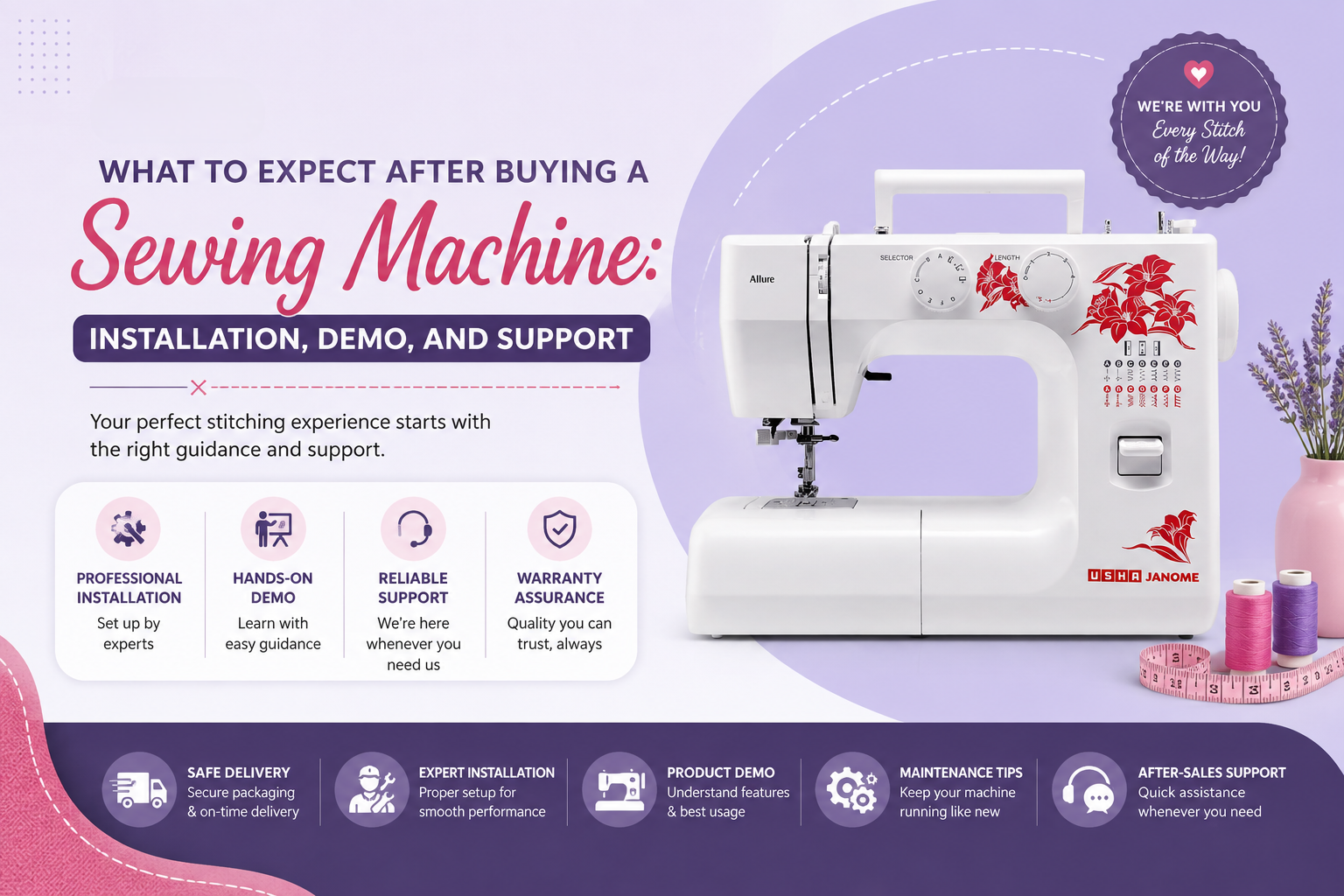
- 2. Professional Installation
- 3. Product Demonstration
- 4. Understanding Machine Maintenance
- 5. Learning About Warranty Coverage
- 6. Troubleshooting Common Beginner Issues
- 7. Customer Support When You Need Help
- 8. Availability of Genuine Spare Parts
- 9. Training Beyond the Basics
- 10. Building Confidence with Regular Use
- Choosing a Dealer That Offers Complete Support
- Final Thoughts
Introduction
Buying a sewing machine is a significant step for hobbyists, home tailors, boutique owners, and garment manufacturers alike. While selecting the right model is important, many buyers overlook what happens after the purchase. Professional installation, expert guidance, and dependable customer support can make the difference between a machine that performs efficiently for years and one that causes unnecessary frustration.
Whether you’re investing in a basic domestic sewing machine, a computerized model, an embroidery machine, or industrial stitching equipment, knowing what to expect after delivery helps you start your sewing journey with confidence.
1. Safe Delivery and Initial Inspection
Once your sewing machine is delivered, the first step is inspecting the package carefully before installation or operation.
Check for:
- External shipping damage
- Missing accessories
- Instruction manuals
- Power cable and foot pedal
- Bobbins, needles, and tool kit
- Warranty documents
Industrial sewing machines may arrive in multiple boxes containing:
- Machine head
- Table
- Stand
- Motor
- Belt
- Accessories
Before using the machine, ensure every component is present, undamaged, and matches the items listed in the package contents. A careful inspection at this stage helps prevent installation delays and ensures any shipping issues are reported immediately.
2. Professional Installation
Many domestic sewing machines are simple enough to assemble at home, while industrial sewing machines generally require professional installation to ensure optimal performance and safety.
Professional installation typically includes:
- Machine assembly
- Table setup
- Motor installation
- Belt alignment
- Needle installation
- Thread path adjustment
- Bobbin setup
- Speed testing
- Safety inspection
Correct installation ensures the machine operates smoothly from the first day, reduces the likelihood of operational issues caused by improper assembly, and helps maximize long-term performance and reliability.
3. Product Demonstration
One of the most valuable services after purchasing a sewing machine is a comprehensive product demonstration. A hands-on demonstration helps users understand the machine’s functions, improves confidence, and reduces the chances of common operating mistakes.
A trained technician or dealer typically explains:
- Basic machine operation
- Correct threading procedures
- Bobbin winding
- Needle replacement
- Stitch selection
- Speed control
- Fabric handling techniques
- Cleaning procedures
- Daily maintenance practices
For computerized sewing machines, demonstrations may also include:
- LCD or touchscreen functions
- Built-in stitch patterns
- Automatic buttonhole creation
- Needle positioning controls
- Memory functions
- Error messages and troubleshooting
Embroidery machine demonstrations often cover:
- Hoop installation
- Design selection
- USB design import
- Thread color changes
- Stabilizer selection
- On-screen editing
- Multi-color embroidery process
Learning these features early allows users to operate the machine confidently, avoid unnecessary mistakes, and make full use of its capabilities.
4. Understanding Machine Maintenance
Routine maintenance is essential for keeping your sewing machine operating efficiently while extending its service life. Proper care minimizes downtime, maintains stitch quality, and reduces the need for costly repairs.
Daily Care
Simple daily maintenance keeps the machine clean and ready for consistent performance.
- Remove lint after every project.
- Replace damaged or bent needles immediately.
- Clean the bobbin area regularly.
- Cover the machine when not in use.
Weekly Maintenance
Weekly inspections help identify minor issues before they affect sewing quality.
- Inspect thread tension.
- Check needle alignment.
- Remove accumulated dust.
- Verify smooth stitch formation.
Periodic Servicing
Professional servicing helps maintain long-term machine performance and reliability.
Typical servicing includes:
- Internal cleaning
- Lubrication
- Timing inspection
- Motor testing
- Belt adjustment
- Thread tension calibration
Following a regular maintenance schedule helps ensure your sewing machine continues delivering smooth operation, reliable performance, and consistent stitch quality throughout its lifespan.
5. Learning About Warranty Coverage
Every sewing machine is supplied with specific warranty terms that protect your investment. Understanding these conditions before using the machine helps you avoid situations that could unintentionally void the warranty.
Before operating the machine, make sure you understand:
- Warranty duration
- Covered components
- Parts excluded from warranty
- Conditions that may void warranty coverage
- Service request procedures
- Required purchase documents
Keeping your invoice, warranty card, and service records in a safe place makes future warranty claims and maintenance requests much easier while ensuring faster customer support.
6. Troubleshooting Common Beginner Issues
Many first-time sewing machine users encounter small problems during their initial projects. Fortunately, most of these issues are simple to identify and resolve using the guidance provided during the product demonstration or user manual.
Thread Breaking
Frequent thread breakage is one of the most common beginner concerns.
Possible causes include:
- Incorrect threading
- Low-quality thread
- Bent or damaged needle
- Excessive thread tension
Skipped Stitches
Skipped stitches affect seam strength and the overall appearance of finished garments.
Possible causes include:
- Wrong needle type
- Improper needle installation
- Fabric and needle mismatch
Fabric Not Feeding Properly
If the fabric does not move smoothly during sewing, inspect the feed mechanism before making adjustments.
Possible causes include:
- Feed dogs lowered
- Incorrect presser foot pressure
- Dirty feed mechanism
Uneven Stitching
Uneven stitches usually indicate incorrect threading or thread tension issues.
Possible causes include:
- Thread tension imbalance
- Damaged or worn needle
- Incorrect threading
Most of these common issues can be corrected quickly by following the operating instructions provided during the machine demonstration and performing routine maintenance checks.
7. Customer Support When You Need Help
Reliable after-sales support provides peace of mind long after purchasing your sewing machine. Having access to knowledgeable technicians and responsive customer service helps minimize downtime and ensures your machine continues operating efficiently.
Support services may include:
- Phone assistance
- Video troubleshooting support
- Availability of genuine spare parts
- Technician visits
- Scheduled maintenance
- Repair services
- Warranty assistance
Prompt technical support helps resolve operational issues quickly, allowing hobbyists, tailoring businesses, and garment manufacturers to continue their projects with minimal interruption.
8. Availability of Genuine Spare Parts
Over time, certain machine components naturally wear out and require replacement. Using genuine spare parts helps maintain stitching performance, protects the machine from unnecessary wear, and extends its service life.
Common replacement items include:
- Needles
- Bobbins
- Presser feet
- Feed dogs
- Bobbin cases
- Belts
- Light bulbs or LED lights
- Thread cutters
Purchasing genuine replacement parts from an authorized dealer ensures proper compatibility, dependable performance, and continued warranty protection whenever applicable.
9. Training Beyond the Basics
Many authorized sewing machine dealers and service providers offer additional training programs that help users maximize the capabilities of their machines. These sessions are particularly valuable for computerized and embroidery sewing machines.
Advanced training may include:
- Decorative stitching techniques
- Quilting guidance
- Free-motion sewing
- Machine embroidery training
- Fabric-specific machine settings
- Productivity tips for tailoring businesses
Continuing your sewing education helps improve efficiency, expand creative possibilities, and increase the overall value of your sewing machine investment.
10. Building Confidence with Regular Use
Even the most advanced sewing machine becomes easier to operate with regular practice. Spending time learning the machine’s controls and experimenting with different fabrics helps users develop confidence while improving stitch quality and overall efficiency.
Begin by:
- Sewing on fabric scraps before starting actual projects.
- Testing different stitch settings.
- Practicing straight and curved seams.
- Working with various fabric types.
- Learning routine cleaning and maintenance procedures.
Consistent practice helps users become more comfortable with their machine, improve accuracy, and confidently handle increasingly advanced sewing projects.
Choosing a Dealer That Offers Complete Support
When purchasing a sewing machine, consider not only the machine itself but also the quality of service provided after the sale. Reliable after-sales support ensures your machine continues delivering dependable performance throughout its lifespan.
Look for a dealer who offers:
- Professional installation
- Hands-on product demonstrations
- Clear maintenance guidance
- Warranty support
- Genuine spare parts
- Responsive customer service
- Ongoing technical assistance
A dependable support network minimizes downtime, simplifies maintenance, and helps both beginners and professionals get the most from their sewing machine investment.
Final Thoughts
A sewing machine is more than just a purchase—it’s an investment in creativity, productivity, and craftsmanship. The experience after buying the machine is just as important as selecting the right model. Proper installation, a thorough product demonstration, routine maintenance guidance, and dependable after-sales support help users maximize their investment while avoiding common operational issues.
Whether you’re a beginner learning your first stitches, a tailoring professional expanding your services, or a business increasing production capacity, understanding the post-purchase process helps you use your sewing machine with confidence and achieve better results from day one.
At Popular Agencies, we believe customer support extends far beyond the point of sale. We provide genuine sewing machines, professional installation, product demonstrations, expert guidance, genuine spare parts, warranty assistance, and responsive after-sales service to help customers enjoy reliable sewing performance for years to come.
Contact Popular Agencies today to explore our complete range of domestic, computerized, embroidery, and industrial sewing machines. Our experienced team is ready to help you choose the right machine and provide the ongoing support you need to sew with confidence, improve productivity, and achieve outstanding results.





Add comment