
Table of Contents
- Introduction
- 1. Reliability Comes First
- 2. Faster Learning and Operation
- 3. Easier Maintenance
- 4. Lower Repair Costs
- 5. Better for High-Volume Production
- 6. Greater Durability
- 7. Consistent Stitch Quality
- 8. Less Time Spent Adjusting Settings
- 9. Better Value for Money
- 10. Simple Machines Build Better Sewing Skills
- Simple vs. Feature-Heavy Sewing Machines
- Who Should Choose a Simple Sewing Machine?
- Final Thoughts
Introduction
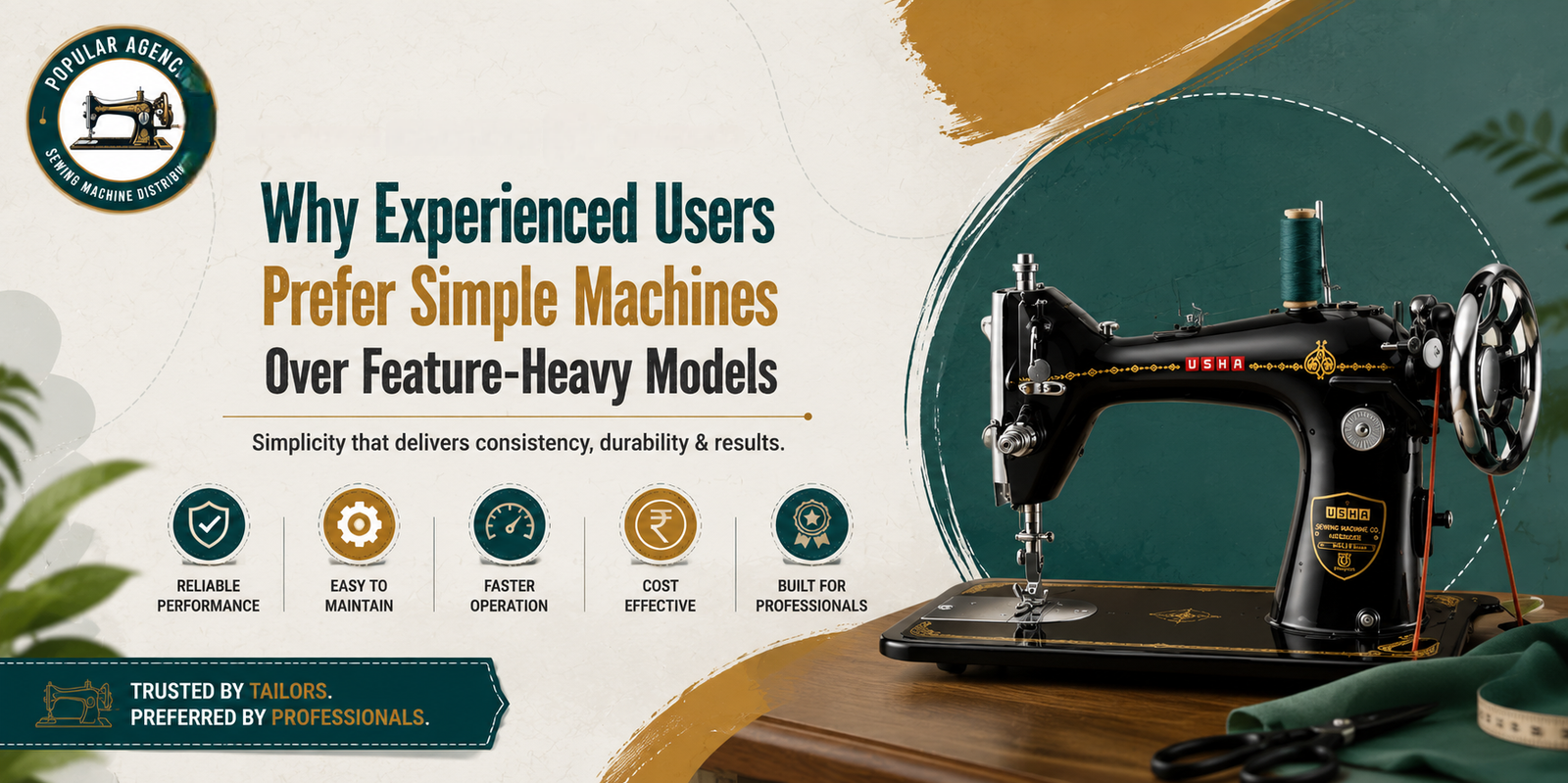
Modern sewing machines come packed with advanced features such as automatic thread cutting, touchscreen displays, hundreds of decorative stitches, and programmable embroidery functions. While these innovations appeal to hobbyists and beginners, many experienced tailors, boutique owners, and garment manufacturers continue to prefer simple sewing machines for their everyday work.
The reason is straightforward—when productivity, consistency, and reliability matter most, a machine that performs its core stitching functions exceptionally well often delivers greater value than one loaded with features that are rarely used.
Simple sewing machines are easier to operate, require less maintenance, cost less to repair, and are designed to withstand long hours of continuous sewing. This makes them an excellent choice for professionals who prioritize efficiency and dependable performance.
In this guide, we’ll explore why experienced users often choose simple sewing machines over feature-heavy models and how this decision can improve productivity while reducing long-term operating costs.
1. Reliability Comes First
For professional tailors and garment manufacturers, reliability is one of the most important qualities in a sewing machine. Unexpected breakdowns can interrupt production schedules, delay customer deliveries, and increase maintenance expenses.
Simple sewing machines contain fewer electronic components and moving parts, reducing the chances of software glitches or complex mechanical failures. Their straightforward design allows them to perform consistently even during extended sewing sessions.
Benefits include:
- Consistent sewing performance
- Lower risk of unexpected breakdowns
- Longer service life
- Better durability during continuous operation
For businesses where every working hour matters, dependable performance is often more valuable than advanced features that are rarely required.
2. Faster Learning and Operation
Experienced sewing professionals already understand stitching techniques and machine operation. They don’t require complicated digital interfaces or multiple automated functions to produce high-quality garments.
Simple sewing machines allow operators to work efficiently by providing quick access to essential controls.
Operators can easily:
- Adjust stitch settings quickly
- Begin sewing immediately
- Switch between projects with minimal setup time
- Focus on craftsmanship rather than navigating menus
This streamlined workflow is especially beneficial in busy tailoring shops and garment production units where speed and efficiency are critical.
3. Easier Maintenance
Every sewing machine requires regular cleaning and servicing to maintain optimal performance. One of the greatest advantages of a simple mechanical sewing machine is how easy it is to maintain.
Compared to computerized models, mechanical machines feature fewer electronic components and offer easy access to important internal parts.
Maintenance advantages include:
- Fewer electronic components to service
- Easily accessible internal mechanisms
- Lower repair complexity
- Readily available spare parts
Routine maintenance tasks such as cleaning lint, oiling moving components, and replacing needles can often be completed without specialized equipment or technical expertise.
4. Lower Repair Costs
Advanced computerized sewing machines often require specialized technicians and expensive replacement components when repairs are needed.
In contrast, simple sewing machines are generally more economical to maintain and repair.
Benefits include:
- Affordable replacement parts
- Faster servicing
- Lower maintenance expenses
- Reduced machine downtime
For tailoring businesses and garment manufacturers, minimizing repair costs directly contributes to improved profitability and uninterrupted production.
5. Better for High-Volume Production
Professional tailors and garment manufacturers often perform the same stitching operations repeatedly throughout the day. In these environments, reliability and speed are far more important than having hundreds of decorative stitch options.
Most professionals rarely use advanced features such as:
- Hundreds of decorative stitches
- Built-in embroidery functions
- Complex programmable stitch patterns
- Multiple automated sewing modes
- High-speed stitching
- Smooth fabric feeding
- Strong and consistent stitch quality
- Reliable continuous operation
Simple sewing machines are designed to excel in these essential areas, making them ideal for high-volume garment production and everyday tailoring.
6. Greater Durability
One of the biggest reasons experienced users prefer simple sewing machines is their outstanding durability. Mechanical sewing machines have earned a reputation for lasting many years when maintained properly.
Their long service life is largely due to their straightforward engineering and robust construction.
Durability comes from:
- Strong metal internal components
- Proven mechanical systems
- Minimal reliance on electronic circuits
- Rugged industrial-grade construction
Because of their dependable design, many mechanical sewing machines continue operating efficiently even after years of regular professional use.
7. Consistent Stitch Quality
Experienced sewing professionals rely on their skills rather than automated machine functions to produce high-quality garments. A well-built simple sewing machine delivers consistent stitching that meets professional standards.
Key advantages include:
- Uniform stitch formation
- Stable thread tension
- Precise fabric control
- Smooth sewing across different fabric types
For professional tailoring, consistency is often far more valuable than having dozens of decorative stitch options that may never be used.
8. Less Time Spent Adjusting Settings
Feature-heavy sewing machines often include numerous digital menus, customization options, and automated functions. While these features can be useful for specialized projects, they may slow down routine sewing tasks.
Simple sewing machines allow operators to make adjustments quickly without navigating complex interfaces.
Users can easily:
- Change stitch length quickly
- Adjust thread tension with ease
- Replace presser feet efficiently
- Resume sewing immediately
These time-saving advantages help improve productivity in tailoring shops, boutiques, and garment manufacturing units where efficiency is essential.
9. Better Value for Money
Many professional tailors and garment businesses focus on essential sewing tasks rather than decorative or computerized features. As a result, many advanced functions available in feature-heavy sewing machines often go unused.
Professional sewing work typically includes:
- Garment stitching
- Alteration services
- Uniform manufacturing
- Home textile production
- Everyday tailoring
Instead of paying for features they rarely need, experienced users prefer investing in machines that offer superior performance in the areas that matter most.
They prioritize:
- Better build quality
- Powerful motors
- Higher sewing speeds
- Reliable long-term performance
This practical approach provides greater long-term value while reducing unnecessary investment in seldom-used technology.
10. Simple Machines Build Better Sewing Skills
For beginners who aspire to become professional tailors, learning on a simple sewing machine provides an excellent foundation. Without depending heavily on automation, users develop essential sewing techniques that remain valuable regardless of the machine they use in the future.
Working with a simple machine helps users better understand:
- Thread tension adjustment
- Proper needle selection
- Stitch length control
- Fabric handling techniques
- Routine machine maintenance
- Core sewing skills and craftsmanship
These practical skills improve confidence, problem-solving abilities, and overall sewing quality, making it easier to transition to more advanced machines when needed.
Simple vs. Feature-Heavy Sewing Machines
| Feature | Simple Sewing Machine | Feature-Heavy Sewing Machine |
|---|---|---|
| Ease of Use | Excellent | Moderate |
| Maintenance | Easy | More Complex |
| Repair Cost | Lower | Higher |
| Reliability | High | Moderate to High |
| Decorative Stitches | Limited | Extensive |
| Production Work | Excellent | Good |
| Learning Curve | Short | Longer |
| Best For | Professionals, Tailors, Small Businesses | Hobbyists, Quilters, Embroidery Enthusiasts |
Who Should Choose a Simple Sewing Machine?
A simple sewing machine is an excellent investment for users who prioritize reliability, ease of use, and consistent stitching over advanced automation. These machines are designed to handle everyday sewing tasks efficiently while requiring minimal maintenance.
A simple sewing machine is ideal for:
- Professional tailors
- Boutique owners
- Alteration shops
- Fashion institutes and training centers
- Garment manufacturers
- Beginners who want to master sewing fundamentals
- Small tailoring businesses seeking dependable equipment
Whether you sew garments daily or operate a growing tailoring business, a simple sewing machine provides the performance and durability needed for long-term productivity.
Final Thoughts
While feature-heavy sewing machines offer an impressive range of automated functions, experienced users often value practicality over complexity. For everyday tailoring and commercial sewing, a simple sewing machine provides dependable performance, lower maintenance costs, straightforward operation, and consistently high stitch quality.
Rather than investing in features that may rarely be used, professionals typically prefer machines that excel at the essentials—smooth fabric feeding, reliable stitch formation, and long-lasting durability. These qualities help improve workflow, minimize downtime, and support consistent production throughout the workday.
For beginners, learning on a simple sewing machine also builds a strong foundation in sewing techniques, machine maintenance, and fabric handling. These skills remain valuable regardless of whether you later transition to more advanced equipment.
At Popular Agencies, we offer a wide selection of reliable sewing machines for home users, professional tailors, boutiques, and garment manufacturers. Our experienced team provides expert guidance, genuine products, dependable after-sales support, and genuine spare parts to help you choose the right machine for your sewing requirements.
Contact Popular Agencies today to explore our range of sewing machines and discover the perfect solution that delivers the ideal balance of reliability, performance, and long-term value for your tailoring or garment production needs.




Add comment